Why YouTube's New AI Slop Rules Mean You Must Humanize Your Marketing
YouTube updated its policies to demonetize and limit the reach of AI slop (low-quality, repetitive content made with generative AI). For business owners, this means automated video channels could lose visibility and revenue unless a human stays involved in the creative process.
Key Takeaways
- YouTube is demonetizing mass-produced AI content to improve viewer experience.
- Repetitive, low-effort videos are now classified as AI slop and face reduced reach.
- Small businesses must keep a human in the loop to maintain brand authority.
- Authenticity and specific, local details are the best defense against being flagged.
- AI should be used as a productivity tool for humans, not a replacement for them.
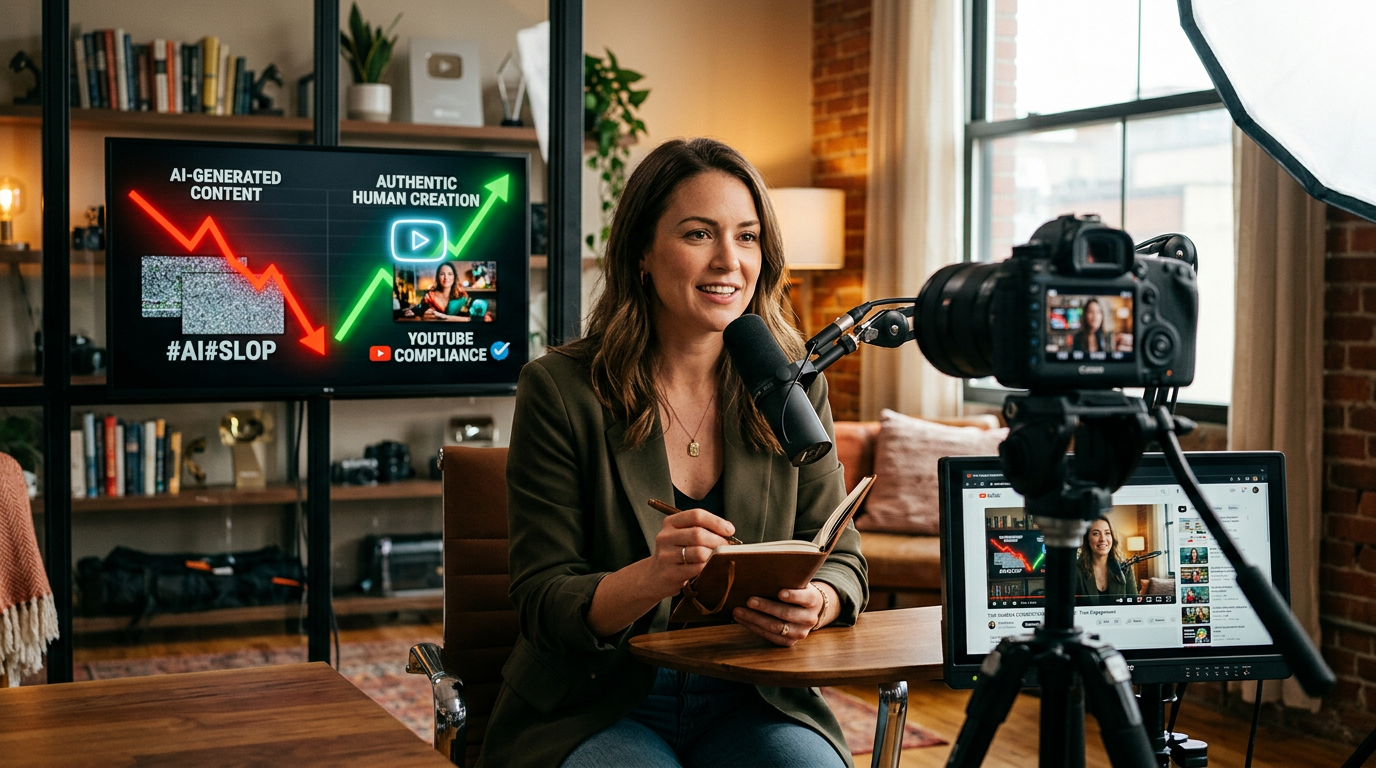
The End of the AI Easy Button on YouTube
YouTube just drew a line in the sand for everyone using artificial intelligence to churn out videos. If you've been tempted to use tools that promise to create 50 videos a day from a single prompt, you're now standing in the crosshairs of a major policy shift. According to reports from TechCrunch, the platform is officially targeting what they call AI slop.
This isn't about banning AI entirely. It's about stripping away the reach and revenue from low-effort, repetitive content that doesn't provide real value to the viewer. For a small business owner, this matters because YouTube is more than just a place for viral clips. It's the second largest search engine on the planet. If your tutorials or product demos get flagged as slop, your authority and your organic traffic will vanish overnight.
I see people trying to bolt on AI to their marketing without checking the quality. They think they can wire up a system that spits out generic voiceovers and stock footage to save time. YouTube's move proves that the platform's priority is the viewer's experience, not making it easier for us to fill their servers with noise.
What Counts as AI Slop?
YouTube defines this content as videos mass-produced with little to no human oversight. This includes channels that post hundreds of videos that look and sound almost identical, often using synthetic voices that lack personality. When the algorithm identifies these patterns, it can demonetize the channel or simply stop showing the videos to new people.
This is a major shift in the YouTube AI content policies for business. In the past, you could get away with being a bit generic if you were consistent. Now, consistency without quality is a liability. If your content looks like it was made by a machine for a machine, YouTube will treat it like spam. They are looking for signals of human creativity and specific intent.
From the trenches, the most dangerous move you can make right now is fully automating your brand's voice. I've seen business owners try to stack multiple AI tools to handle everything from scriptwriting to video editing without ever hitting the pause button to review the output. That is the fastest way to get your account flagged and your work deleted.
Protecting Your Brand Authority
The real risk here isn't just losing a few dollars in ad revenue. Most small businesses use YouTube to build trust and get leads. If your content is labeled as low-quality AI, you're telling every potential customer that you are too busy to talk to them personally. You're effectively sanding down your brand's edges until there's nothing unique left for a customer to grab onto.
Think of AI as a power tool. A power saw can help you build a house faster, but it won't design the house for you. If you let the tool do the thinking, you end up with a pile of scrap wood. You need to keep a human in the loop (a real person needs to check and edit the work) to ensure the final product actually helps your audience.
How to Use AI Without Getting Banned
You can still use these tools to speed up your workflow. The key is to use them to enhance your ideas rather than replace them. Here are 4 ways to keep your business content safe and effective this week:
- Edit every script: Never take a script directly from an AI tool and turn it into a video. Read it out loud. If it sounds like a textbook, strip back the jargon and add a specific detail about your business.
- Use your own voice: While AI voice clones are getting better, using your own voice provides a level of authenticity that algorithms can't mistake for slop. If you must use a synthetic voice, make sure the content is highly original and provides unique data.
- Mix in real footage: Don't rely 100% on AI-generated images or generic stock clips. Bolt on a few seconds of you in your office or a shot of your actual product. This proves to YouTube that a real person is behind the camera.
- Focus on solving specific problems: AI slop is usually broad and vague. You can beat the filter by being incredibly specific. Instead of a video on growing a business, make one on how you saved $450 on shipping costs in Dayton, Ohio.
The First Step You Should Take Today
Go back and look at the last 3 videos you posted. If you didn't know you made them, would you think they were helpful or just noise? If they feel a bit robotic, don't panic. Just start making your next video with a more hands-on approach.
Stop looking for the magic button that does all the work for you. Instead, look for the tools that take the boring 20% of the job off your plate so you can spend more time on the 80% that actually connects with your customers. That's how you stay visible in an environment that is increasingly hostile to automation.
Watch for YouTube to roll out even more specific labels for AI content in the coming months. They want transparency, and providing it early will likely help your standing with the algorithm. If you want to see exactly how I wire up these tools without losing the human touch, my 3-day training is where I walk through the whole process live.
FAQ
Does YouTube ban all AI-generated videos?
No, YouTube allows AI tools but targets slop, which is low-quality, repetitive, or mass-produced content that lacks human oversight and value.
What happens if my business video is flagged as AI slop?
Your video may be demonetized, meaning you won't earn ad revenue, and its visibility in search and recommendations will likely be restricted.
How can I make AI content look more human to YouTube?
You can add your own voiceovers, include real-world footage of your business, and edit AI-generated scripts to include personal insights and specific data.