Why Robot Training Centers Are The New Trade Schools
Agility Robotics opened a training hub to teach robots physical labor. While humanoid robots aren't in small shops yet, the infrastructure is being built to turn manual labor into a fixed software cost within the next 3 years.
Key Takeaways
- Agility Robotics opened a Palo Alto facility to refine how bipedal robots work in human spaces.
- AI robotics will eventually shift labor from a variable hourly cost to a fixed monthly lease.
- Small businesses should focus on standardizing physical processes and digitalizing inventory now.
- Humanoid robots are expected to hit regional distribution centers within 24 to 36 months.
- Automation works best in clean, predictable environments with high-quality digital data.
The Physical Shift Has Started
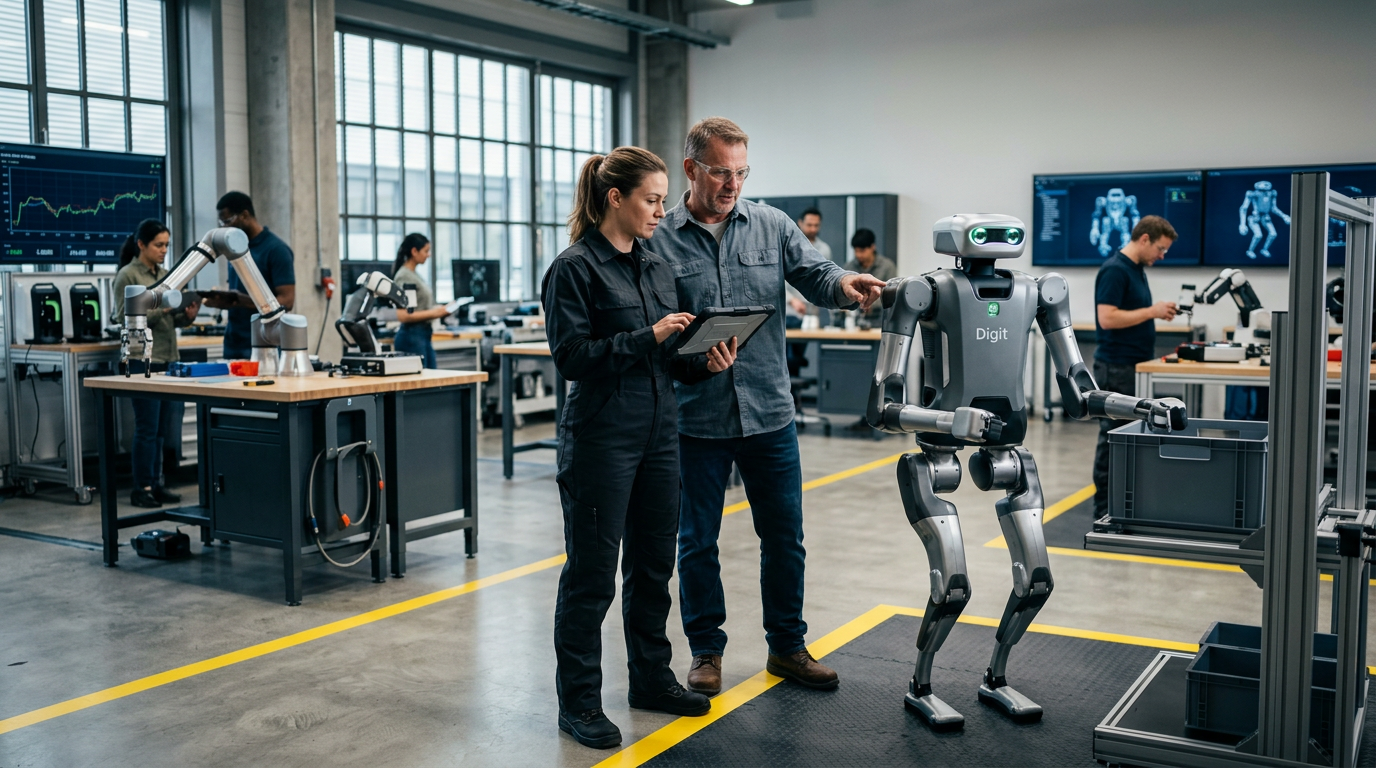
AI isn't just a chat box on a screen for writing emails. That changed when Agility Robotics opened a new hub in Palo Alto. They aren't just building parts. They've built a training center to teach bipedal (two-legged) robots how to move and work in human environments.
Look past the shiny metal and the sci-fi look. This is a new kind of labor infrastructure. When a company builds a center to train robots, they're treating software like a new hire that needs to learn how to stack a pallet or move a bin. For a business owner, this means the cost of physical tasks will soon be measured in electricity and software updates rather than hourly wages and workers' comp insurance.
The Practical Timeline for Local Shops
You probably won't buy a humanoid robot for your local retail shop or small warehouse this month. The technology is still expensive and mostly lives in controlled environments. However, the move by Agility Robotics shows that the brains of these machines are being refined right now. They're using these centers to fix how robots navigate tight corners and uneven floors.
I expect we'll see these machines hitting mid-sized regional distribution centers within the next 24 to 36 months. Once the big players like Amazon prove the math works, the technology usually trickles down to smaller operations. If you run a business where people spend 8 hours a day moving box A to spot B, your competitive environment is about to shift.
The smartest move you can make right now isn't buying a robot. It's cleaning up your data and your physical processes. A robot can't help a messy business. If your inventory isn't tracked digitally and your floor plan is a disaster, even the smartest AI will fail in your building.
What This Means for Your Future Labor Costs
Labor is usually the biggest line item on your P&L (Profit and Loss statement). AI robotics for small business will eventually turn that variable cost into a fixed capital expense. Instead of worrying about a labor shortage or rising minimum wages, you'll be looking at the monthly lease for a machine that doesn't get tired or call in sick.
This sounds cold, but it's the reality of the market. The goal is to move your human staff into higher-value roles. Let the machine do the heavy lifting that ruins a person's back by age 50. Use your people to talk to customers, solve complex problems, and manage the systems. The training centers being built now are the proof that this transition is no longer a theory.
How to Prepare Your Business This Week
You don't need to be an engineer to get ready for this. You just need to be a disciplined operator. Here are 4 things I'd do if I were looking at my business through the lens of future automation:
- Audit your repetitive tasks: Walk your floor with a notepad. Write down every task that requires zero critical thinking. If a task is just pick, move, drop, it's a candidate for a robot in the near future.
- Standardize your containers: Robots love consistency. If you use 10 different box sizes, try to get it down to 3. The more predictable your physical environment is, the easier it will be to bolt on automation later.
- Digitalize your inventory: If you don't have a real-time digital record of where every item is in your building, start there. AI needs data to act. If the data doesn't exist, the robot is just a paperweight.
- Watch the lease models: Keep an eye on Robots as a Service. You likely won't buy a robot for $100,000. You'll probably rent one for $2,000 a month. Start thinking about how that fits into your budget now.
The Next Milestone
Watch for the first major partnership between these robotics firms and a third-party logistics provider. When you see a company that manages warehouses for small brands start using these machines, that's your signal. The tech is moving out of the lab and onto the loading dock. I'll be keeping an eye on the safety certifications these robots receive next, as that's the final gate before they can work side-by-side with your existing team.
If you want to see how to start wiring up the software side of AI to save hours this week, join my next free 3-day training. We won't be building robots, but we will be building the digital systems that make automation possible for your business.
FAQ
When will small businesses actually be able to use these robots?
Large hubs are testing them now. Practical adoption for mid-sized and small businesses is likely 3 to 5 years away as costs decrease and lease models become common.
Will I have to pay hundreds of thousands of dollars for a robot?
Probably not. Most experts expect a Robots as a Service model where you pay a monthly fee, similar to how you pay for software subscriptions today.
What is the first step to take if I want to automate my warehouse?
Standardize your physical containers and ensure your inventory management system is 100% digital. Robots require predictable environments and clean data to function.