The AI-First GTM Stack: Wire Up Your Sales Engine Without the Headcount
To run an AI-driven GTM strategy, you need a Smart CRM as your foundation. Connect it to AI agents for lead research (like Clay), personalized outreach (like Instantly), and automated retention monitoring using platforms like Make or Zapier.
Key Takeaways
- Use a Smart CRM as the central brain to avoid disconnected data silos.
- Replace manual prospecting with AI data enrichment tools that trigger based on real-world events.
- Scale personalized sales outreach by using agents that research prospects before drafting emails.
- Automate customer retention by setting up agents to monitor account activity and flag risks.
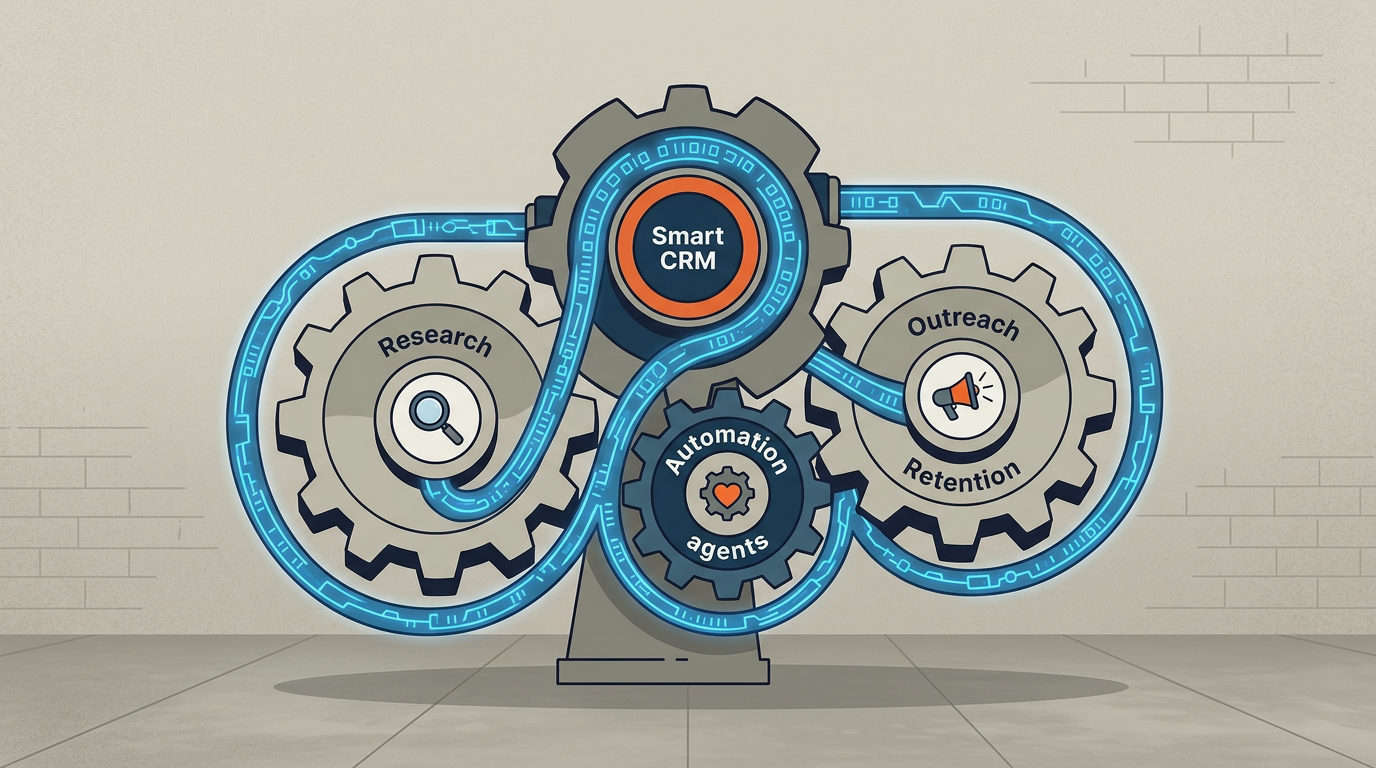
Most business owners try to build a Go-To-Market (GTM) strategy by piling on software. They buy a tool for email, a tool for LinkedIn, and a tool for their website, then realize none of them talk to each other. You end up with a mess of tabs and a massive payroll to manage them.
An AI-driven GTM stack works differently. Instead of just storing data, your tools use AI agents (software programs that perform specific tasks) to work like a human employee would. These agents can research leads, draft personalized emails, and update your records while you sleep.
The Foundation: Your Smart CRM
Everything starts with a Smart CRM (Customer Relationship Management). This is your single source of truth. According to HubSpot, a CRM-first architecture ensures that your marketing, sales, and service teams look at the same data. In an AI-first stack, the CRM acts as the brain that feeds information to your agents.
1. Lead Generation: The Research Agent
Traditional lead gen involves manual scraping or buying stale lists. An AI-first stack uses tools like Clay or Apollo to find prospects based on specific triggers. For example, if a company just hired a new VP of Sales, an AI agent can detect that change, find the email, and verify it. You're stacking data enrichment (adding details to your contact list) directly onto your prospecting flow.
2. Sales Engagement: The Outreach Agent
Once you have the lead, you need to start a conversation. Tools like Instantly or Lavender use AI to scan a prospect's LinkedIn profile or recent news. The agent then writes a custom opening line that references actual facts. This is personalized outreach at scale.
3. Retention: The Customer Success Agent
GTM doesn't end when the contract is signed. AI agents can monitor how often a customer uses your product. If their activity drops, the agent can flag the account or send a check-in email. This wires up your retention efforts so nobody falls through the cracks.
How to Connect the Stack
To make this work, you need a way to move data between these tools. You can use platforms like Make or Zapier to bolt these pieces together. Think of these as the digital plumbing. When a new lead is found in your research tool, the plumbing sends it to your CRM, which then tells the outreach agent to send the first email.
Start with one piece of the lifecycle. Pick the part of your sales process that takes the most manual effort and swap that task for an AI agent today.
FAQ
What is the first step to building an AI GTM stack?
Start by centralizing your data in a Smart CRM. This ensures all your AI agents draw from the same source of truth.