Stop Scraping, Start Connecting: The Move to Authenticated AI Agents
Websites are blocking AI agents to protect data and ad revenue. To fix this, you must switch from generic web scraping to official APIs, residential proxies, or authenticated logins that identify the agent as a legitimate user.
Key Takeaways
- Major platforms like Amazon and Delta are actively blocking AI agents.
- Generic scraping is no longer a reliable way to gather business intelligence.
- APIs provide a stable, official way to connect AI to external data.
- Residential proxies help agents bypass blocks by mimicking home internet users.
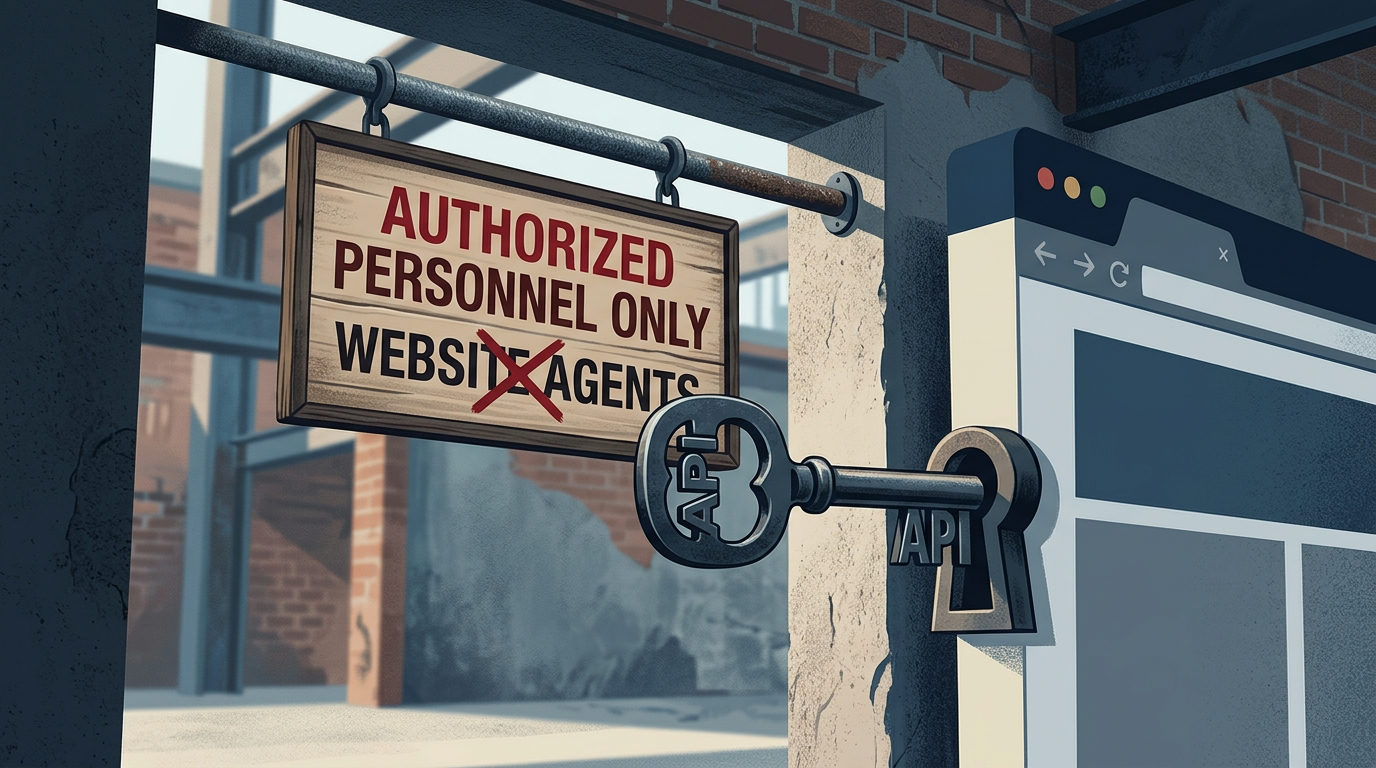
If your AI agents are failing to pull price data, research competitors, or book travel, you're not alone. Major platforms like Amazon, Delta, and Yelp have started blocking generic AI agents. These companies want to protect their data and ensure human eyeballs see their ads. Amazon even sued the startup Perplexity over its agentic shopping features, while Delta and Amtrak have cut off automated booking attempts.
This creates a problem if you use AI for repetitive research or lead generation. When a site blocks an agent, it usually flags the IP address (a digital return address) or the user agent (a string of text that tells the site what kind of software is visiting). If the site sees a request coming from a known AI server, it shuts the door.
The Shift to Authenticated Agents
The fix is to move away from generic scraping and toward authenticated workflows. An authenticated agent uses your specific login credentials or a dedicated connection to talk to a website. Instead of trying to sneak past the front door, these agents use official channels.
For example, instead of asking an AI to read a profile by visiting a site, you wire the agent to an official API (Application Programming Interface). An API is a digital doorway that allows two pieces of software to talk to each other directly. It's more stable and won't break when a website changes its layout.
Three Ways to Fix Failing AI Agents
If your current tools are breaking, you likely need to change the mechanism they use to gather data. Here are the three primary methods to keep your operations running:
- Use Official APIs: This is the gold standard. Most major platforms like Google or Salesforce offer these connections. When you connect via an API, the data flows in a structured format that AI can process with high accuracy.
- Residential Proxies: If an API isn't available, your agent might be getting blocked because its IP address looks like a data center. Residential proxies route your agent's request through a standard home internet connection. This makes the request look like it's coming from a real person at home.
- Headless Browsers: Some websites check for human-like behavior, such as mouse movements. A headless browser is a web browser without a visible window that can perform these actions. It helps the agent navigate pages that block simple bots.
The Cost of Compliance
Many platforms, including JPMorgan Chase and Charles Schwab, are blocking agents due to security concerns. Others, like Yelp, are moving toward licensing models. This means you might have to pay for a data subscription to keep your agents connected. While this adds a line item to your budget, it prevents your systems from breaking every time a website updates its security.
Relying on free scraping is a high-risk strategy. If your lead generation depends on this data, moving to an API-first setup is the only way to ensure your systems don't go dark. Audit your AI tasks today. If a task is failing, check if that service offers a developer API. Switching to that official connection usually fixes the problem instantly.
If you want to see exactly how to wire these connections up without writing code, join our next live session.