Your Best Content May Already Be in a Voice Note
Turn one customer question into a voice note, an AI-assisted draft, and a post that keeps your point of view. Includes a copyable editing prompt.
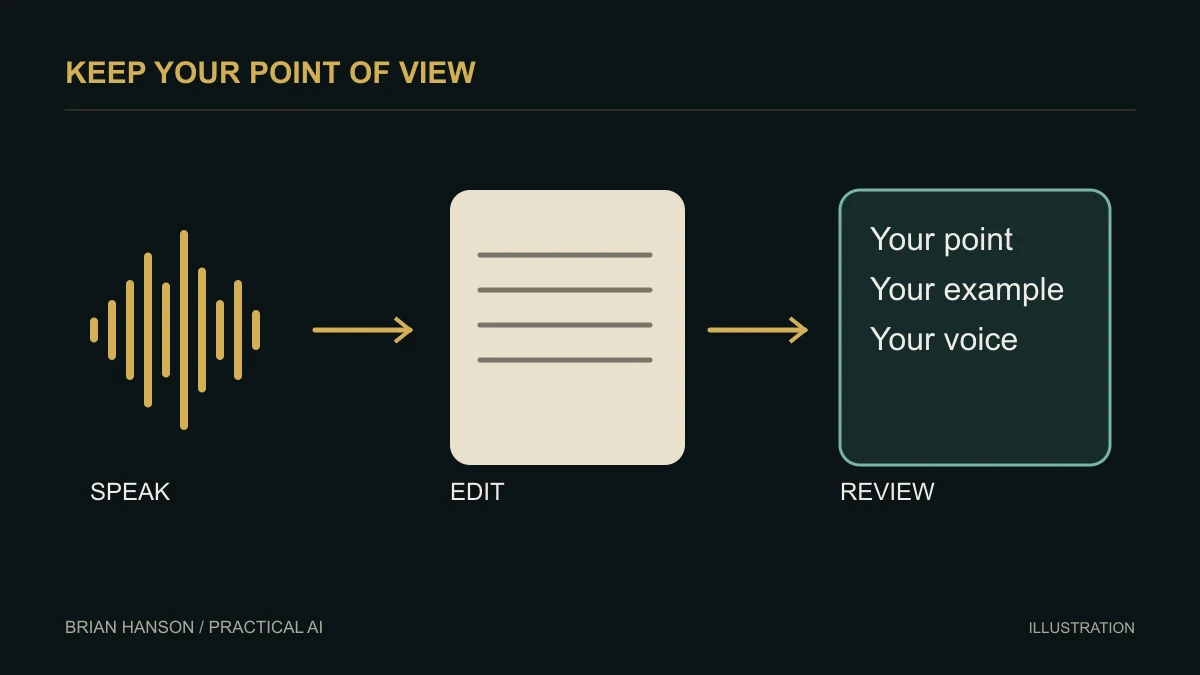
You answer a customer question clearly on the phone. Then you sit down to write about it and suddenly sound like a brochure. Start with the answer you already gave.
Here is a proposed workflow for turning a voice note into useful content. The examples are fictional; they demonstrate the editing process, not a client's results.
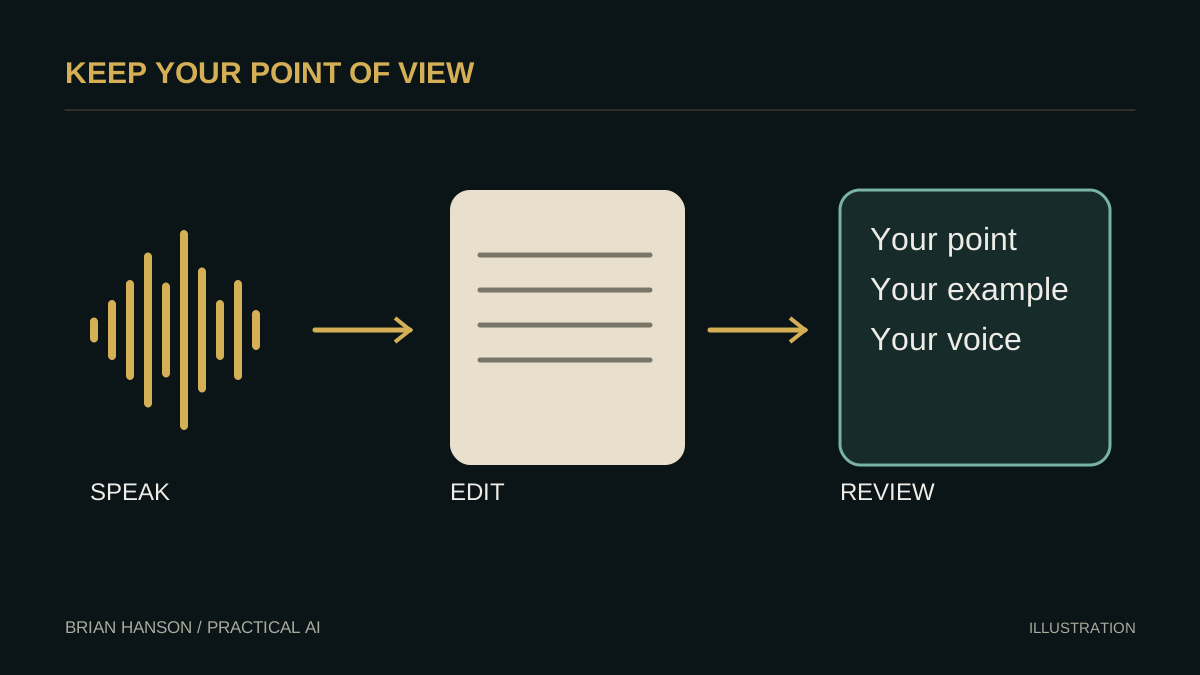
Record an answer, not a presentation
Choose one question customers ask before buying. Record your answer while stationary and able to focus. Include what you recommend, why, and one situation where you would recommend something else. Remove customer names and private details before using a transcription or AI service.
Do not worry about an elegant introduction. The valuable part is your judgment: what would you tell this particular person that a generic article would miss?
What to preserve when AI edits your words
| Stage | Fictional example from a painter |
|---|---|
| Voice note | Everyone asks if two coats fixes a patchy wall. Sometimes the patch needs primer first. More paint does not solve every surface problem. |
| Generic rewrite | Transform your space with professional painting solutions. |
| Useful edit | Before buying another tin of paint, check the patch. A surface that needs primer may still look uneven after another coat. |
The useful edit keeps the original distinction. It does not add a price, a guarantee, or a story about a job that never happened. The painting example illustrates writing choices; have a qualified practitioner verify technical advice before publishing it.
A prompt you can reuse
Edit the transcript below into one short post for [audience]. Preserve my recommendation, my reason, and my exception. Remove repetition. Do not add facts, experiences, promises, or a sales pitch. Show the draft, then list anything unclear that I should verify. Keep distinctive phrases that sound natural when spoken. Transcript: [paste your anonymized transcript].
Providing clear context and refining the result matches OpenAI's prompting guidance. It does not remove the need to edit.
Read it aloud before you schedule it
Underline the sentence containing your actual advice. If there is not one, the draft is still too generic. Compare every factual statement with your recording. Then read it aloud and replace any phrase you would never say to a customer.
Save the approved draft and the transcript together. You now have a useful voice example for the next article. For the wider publishing workflow, use the AI marketing automation guide.