Stop Guessing What Sells: Use AI to Predict Fashion Trends and Cut Inventory Risk
Small fashion businesses use AI to analyze market trends and create digital prototypes. This allows owners to validate designs with customers before spending money on inventory, reducing the risk of unsold stock.
Key Takeaways
- AI identifies emerging fashion trends by analyzing social media and search data.
- Generative AI creates photo-realistic product samples without physical manufacturing costs.
- Ghost testing designs with your audience ensures you only buy inventory that is likely to sell.
- Automating marketing content with AI saves hours of time and reduces photography fees.
- Small businesses use these tools to compete with large retailers on speed and accuracy.
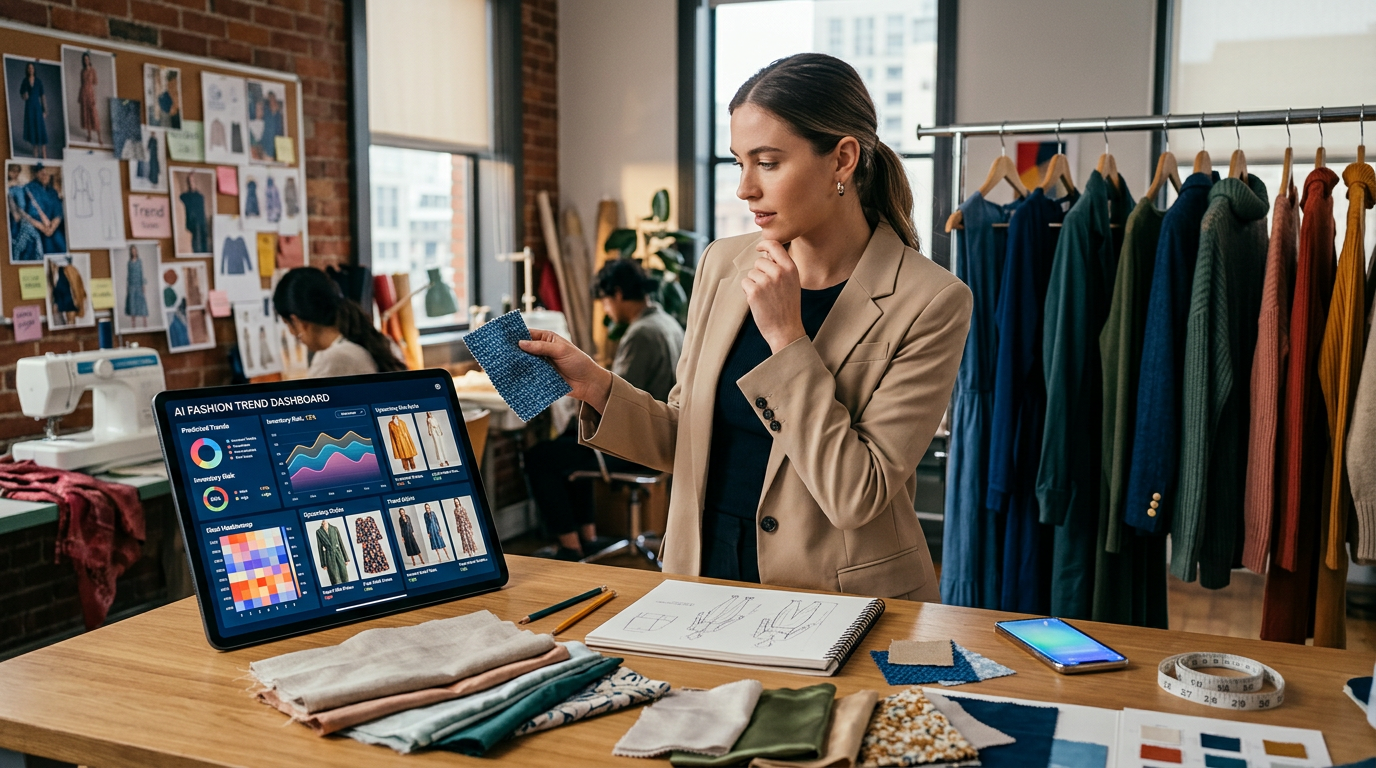
The Inventory Trap in Small Retail
Most small fashion business owners run their shops on gut instinct. You look at what sold last season, guess what might be popular next month, and place a big order. If you guess wrong, you end up with a backroom full of dead stock you have to mark down by 70% just to clear the shelf. It's the fastest way to kill your cash flow.
There's a better way to handle this. You can use AI for fashion small business needs to validate an idea before you spend a single dollar on fabric. Research from Brasil 247 shows small brands use these tools to identify emerging trends and produce marketing content in a fraction of the usual time. They aren't just making art; they're making informed buying decisions.
How AI Trend Analysis Works for You
Think of AI as a digital researcher that's scanned social media posts and tracked search terms across the internet. Instead of you spending hours scrolling through Instagram to see if lime green is popular, you can ask the software to analyze the patterns. This is called trend forecasting. It's just a way to see what people are actually looking to buy right now.
I think of it as stacking the deck. When you know that searches for a specific type of linen dress are up by 40%, you don't have to wonder if you should stock them. You just need to decide how many. This takes the emotional stress out of the buying process. You stop being a gambler and start being a merchant who uses data.
I've seen business owners spend weeks designing a line only to have it flop. When you wire up an AI tool to help with the heavy lifting, you can test 10 different designs in one afternoon. You aren't replacing your creativity. You're just giving your creativity a set of guardrails so you don't drive off a financial cliff.
Step 1: Find the Signal Without the Tech Headache
You don't need to be a programmer to do this. You can use AI tools to scan social media hashtags related to your niche. Look for clusters of images that share similar colors, cuts, or materials. If you see a specific style of collar appearing in viral posts across 3 different countries, that's a signal. The goal is to find the signal in all the noise.
Step 2: Bolt on Virtual Prototypes
This is where you save money. Instead of paying a seamstress to make a physical sample, you use generative AI (software that creates new images from text) to create a photo-realistic image of the product. You describe the garment in plain English. For example, you might type, "A mid-length floral dress with puffed sleeves and a square neckline in sustainable cotton." The AI spits out a high-quality image that looks like a professional photoshoot.
Step 3: Run a Ghost Test
Once you have your images, you can show them to your customers before the product exists. Put them in an email newsletter or a poll. Ask your buyers, "Which of these 3 designs would you wear this summer?" The data you get back is gold. If 80% of your audience picks Design A, you've just saved yourself from buying Design B and C. You only order what the market already wants.
Step 4: Stack Your Content Production
Small businesses often struggle to keep up with the demand for new photos. The research from Brasil 247 shows that AI helps brands gain time by automating marketing materials. You can take your digital prototype and place it on different virtual models or in different settings (like a beach or a city street) without leaving your desk. This strips back photography costs and keeps your feed fresh.
What to Do Next
The next shift will be the integration of these tools into your inventory software. Soon, your system will suggest exactly what new styles you should add based on real-time global trends. For now, your best move is to start playing with image generation tools to test your ideas. Stop guessing and start validating. If you want to see exactly how to set these tools up for your shop, my 3-day training is the best place to start.
FAQ
Do I need to know how to code to use AI for my fashion business?
No. Most modern AI tools use plain English prompts. If you can describe a dress or a shirt in words, you can use these tools to generate designs and analyze trends.
Is AI-generated fashion only for high-end brands?
Not at all. Small businesses benefit more because they have less room for financial error. AI helps small shops manage cash flow by preventing bad inventory buys.
How does AI save me time in my daily operations?
It speeds up the research phase and the content creation phase. Instead of spending days looking for trends or hours setting up a photoshoot, AI handles these tasks in minutes.