One Draft, Three Opinions: Make the Approval Decision Clear
Define the owner, reviewer, decision, and deadline for each marketing asset. Use AI to organize feedback without letting it approve work for you.
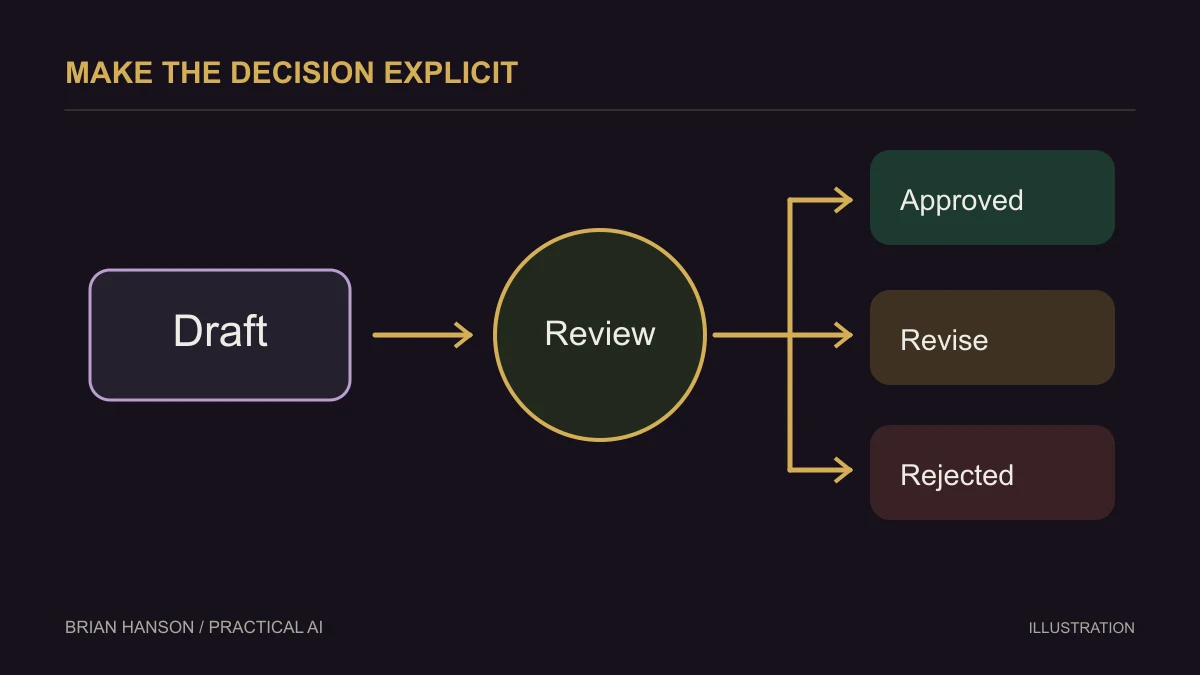
"Looks good" is not always approval. It might mean the designer likes the layout while the person responsible for the offer has not checked the price.
Before buying another review tool, agree on who makes which decision. This proposed process works as a checklist you can adapt to your existing workspace. It is not a claim about unverified Markup AI features.
Make every asset carry its own brief
| Field | Example for a fictional workshop ad |
|---|---|
| Owner | The person responsible for getting the finished asset out |
| Version | One link to the exact draft under review |
| Decision needed | Check the date, offer, registration link, and visual fit |
| Approver | A named person with authority to approve this offer |
| Deadline | A stated date and timezone, with an escalation contact |
Do not treat silence as approval. If a deadline passes, flag the delay to the owner. Quietly publishing an unchecked offer makes the workflow faster only on paper.
Separate comments from the decision
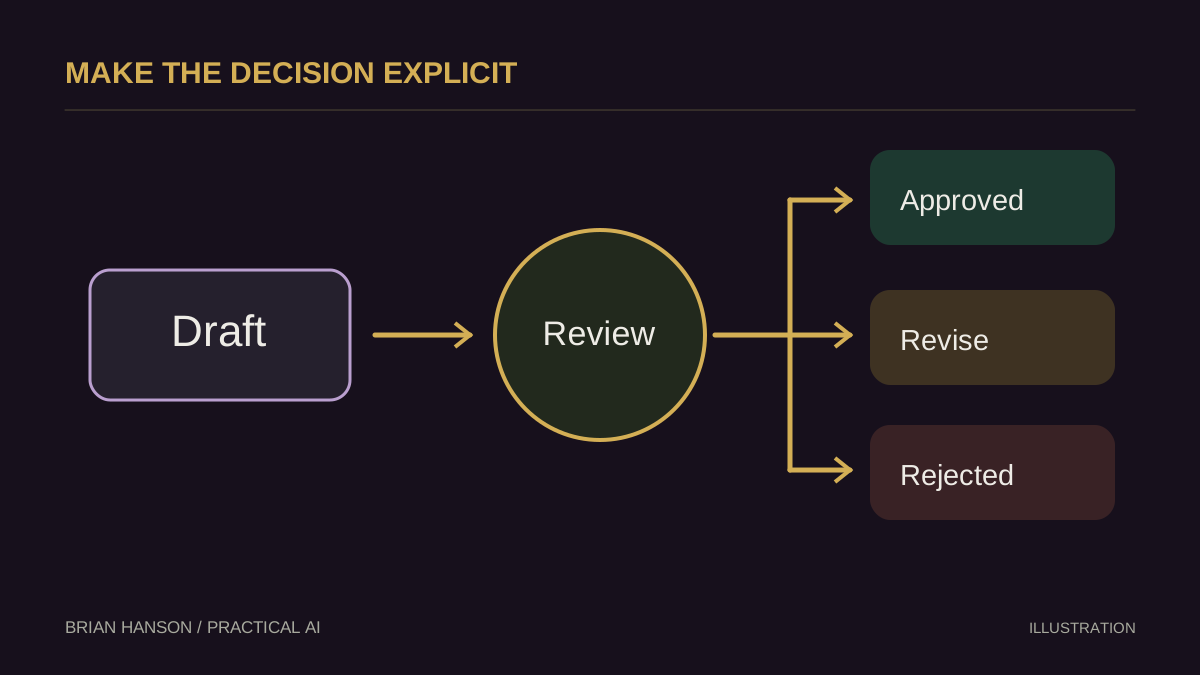
Use explicit outcomes: approved, changes requested, or rejected. Asana's approval documentation provides an example of this pattern in a real product. Confirm your tool's capabilities and permissions before adapting it.
Keep one comment location. If feedback arrives in a separate message, bring it into the review record and identify who said it. When the draft changes, record whether the previous approval still applies.
Let AI sort feedback, not grant approval
Organize these review comments into required changes, optional suggestions, conflicting requests, and unanswered questions. Preserve the author and source reference for each comment. Do not infer approval from silence or resolve conflicting instructions yourself. Produce a checklist for the asset owner.
Compare the checklist with the original comments. A summary that drops a required correction creates more work than it saves.
Review the bottleneck after a small trial
Use this process on a handful of assets. Record when each asset entered review, when a decision arrived, and why another revision was needed. If one approval repeatedly stalls, clarify the decision or assign a backup before introducing more automation.
The marketing automation guide can help you choose the next repeatable task once ownership is clear.