Stop Automated Takedowns From Killing Your Business
AI tools like Tracer AI are firing off thousands of baseless copyright notices, causing apps like Luanti to be removed from stores unfairly. Small business owners must document licenses and prepare counter-notices to prevent automated legal bullying from shutting down operations.
Key Takeaways
- AI bots send automated DMCA notices without human verification.
- Platforms often remove content immediately to avoid liability.
- Baseless claims can take down a business for days during the appeal.
- Small businesses must maintain a Legal Proof folder with all licenses.
- Filing a formal Counter-Notice forces platforms to restore content within 14 days.
The New Threat to Your Digital Storefront
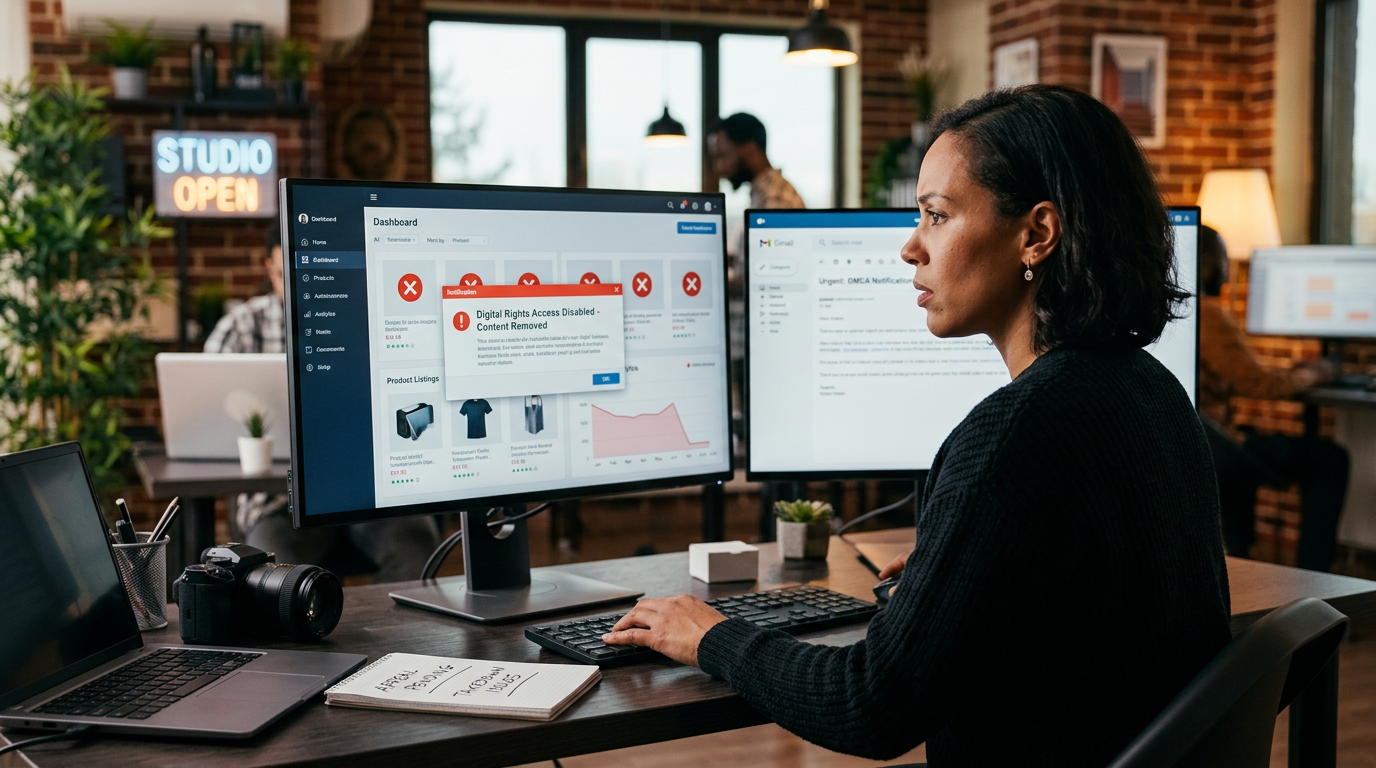
Your entire business could vanish because a computer program made a mistake. It happened to Luanti, a major software project. Google Play kicked them off the store because of a baseless AI copyright notice. An automated tool flagged their code as a violation without a human checking the facts. If it happens to them, it can happen to your website or app.
Most owners think they're safe because they don't steal content. That doesn't matter. We're seeing a rise in automated legal bullying. Software scans the web and fires off legal threats, called DMCA takedowns, at anything that looks suspicious. These bots aren't lawyers. They're math equations that get things wrong. Big platforms like Google or Amazon usually shoot first and ask questions later. They pull your product to avoid liability.
The Mechanics of a Digital Takedown
The Digital Millennium Copyright Act (DMCA) governs this. It was meant to stop people from pirating movies. Now, companies use AI tools to send thousands of these notices every hour. A tool called Tracer AI flagged Luanti. Even though the claim was wrong, the app stayed gone for days. For a small business, 3 days of zero sales is a disaster.
Think of your digital presence like a physical building. A DMCA notice is like a city inspector boarding up your front door without a court order. You have to prove you're innocent to get the boards off. If you rely on one platform like the Apple App Store, you're vulnerable. You need to wire up defenses before the bots knock.
The Reality of AI Copyright DMCA Protection for Small Business
I've seen owners lose weeks of revenue because they couldn't reach a human to fix a bot's mistake. You can't assume the system is fair. These systems prioritize speed over accuracy. Treat your digital assets like your bank account: don't keep everything in one place that can lock you out. You need backups and a plan to fight back the second a notice hits your inbox.
How to Build Your Defense Shield
You don't need a law degree, but you do need to be organized. First, stack your evidence. Keep a folder of every license, stock photo receipt, and design contract. If a bot flags a photo you paid for, you need that receipt ready to send in 10 minutes, not 10 days.
Next, strip back your reliance on a single point of failure. If your whole business runs on one platform, you're one bad scan away from zero. I recommend a hot standby version of your store. This is a secondary version hosted elsewhere that you can switch on if your main site goes down. It keeps the lights on while you argue with the lawyers.
You also need to learn how to file a Counter-Notice. This is the legal way to say the claim is wrong and demand your content be restored. Most platforms have a form for this. If you file it, the platform usually must put your content back within 10 to 14 business days unless the other person sues you. Most automated bullies won't sue because their claim is weak. They just want you to fold.
Practical Actions for This Week
- Audit your assets: List every image and video you use. Verify you have the license. Put these in one folder labeled Legal Proof.
- Set up a secondary channel: If your site goes down, how do customers find you? Make sure you have an email list or social page not tied to your main domain.
- Draft a response template: Create a document with your business details and a basic Counter-Notice statement. Having this ready reduces panic during a Friday afternoon legal scare.
- Monitor your brand: Use Google Alerts to see if others are using your content. Sometimes bots flag you because someone else stole your work and claimed it first.
What to Watch Next
The legal world is catching up to how fast AI tools cause damage. We'll probably see new rules that punish companies for sending false notices. Until then, the burden is on you to stay standing. Watch for updates on how Google Play changes its appeal process. I'll be watching to see if they start requiring a human to verify these notices before pulling the plug on a business.
FAQ
What is a DMCA notice?
It is a legal request sent to a service provider to remove content that allegedly infringes on a copyright.
Can AI really take down my website?
Yes, companies use AI to scan the internet and automatically send takedown notices that platforms act on without human review.
What should I do if my site is taken down?
Immediately file a Counter-Notice with the platform and provide your proof of licensing to get the content restored.