Steal the Service-Sector AI Strategy South Korean Small Businesses Are Using Right Now
South Korea recently selected 175 SMEs to receive AI transformation support. Small business owners can replicate this by automating customer intake, connecting their software tools, and using AI to summarize daily tasks to reduce overhead and manual errors.
Key Takeaways
- South Korea is actively funding AI integration for 175 SMEs in the service sector.
- Digital transformation for small business is about connecting existing tools, not building new ones.
- Automating customer intake and scheduling is the highest ROI first step.
- Use AI for synthesis (summarizing calls and creating tasks) rather than just writing text.
- Integration tools like Zapier act as the glue for a modern service-sector workflow.
Stop Waiting for a Handout and Start Stacking Software
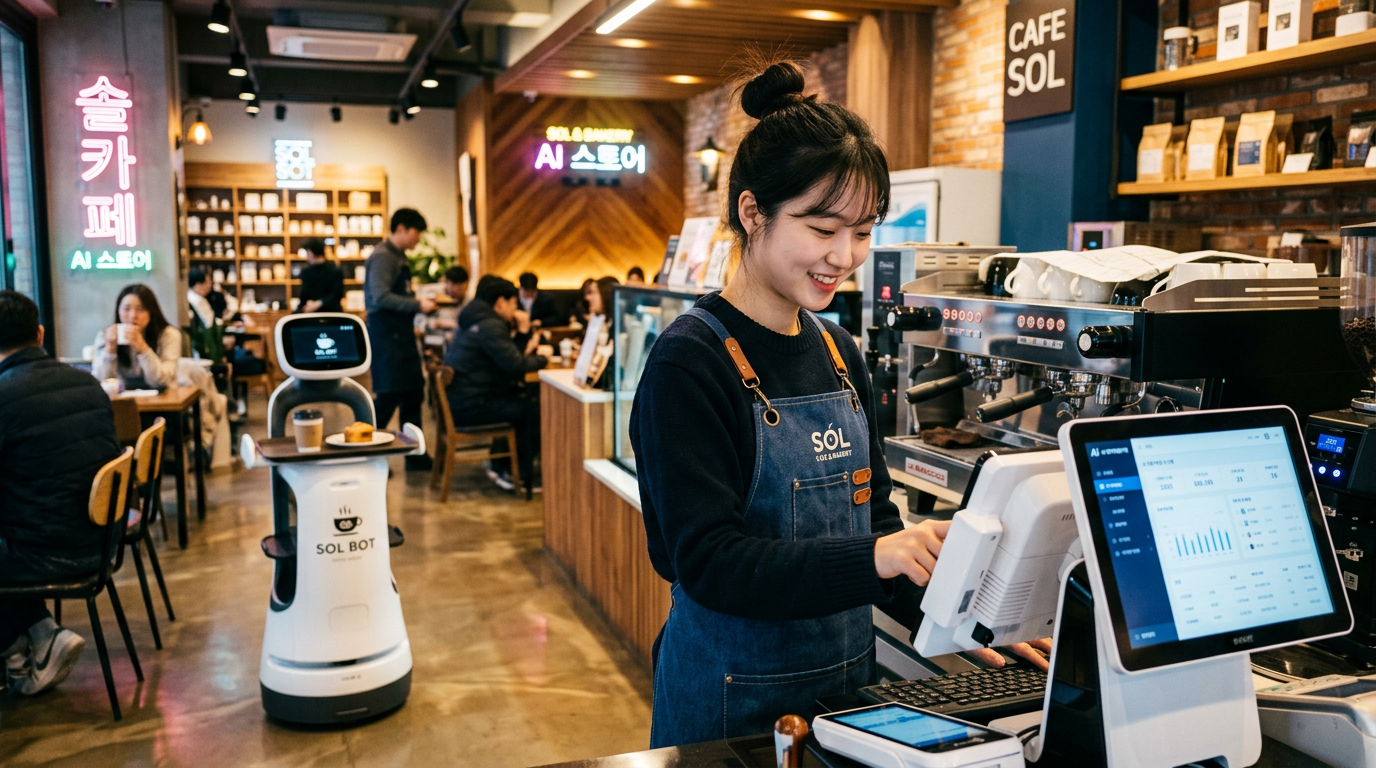
South Korea just selected 175 small and medium enterprises (SMEs) to receive direct support for their digital transformation efforts. According to SBS News, the Ministry of SMEs and Startups and TIPAE are focusing on the service sector to help businesses automate their daily grind. You might not have a government agency cutting you a check, but you can copy the exact roadmap these companies are using to reclaim your time.
Digital transformation is just a fancy way of saying you use software to do things humans used to do by hand. For a service business, this means moving from paper logs and manual emails to systems that talk to each other. The South Korean model shows us that you don't need a massive laboratory. You just need to bolt on a few specific tools to your existing workflow.
The Service-Sector Blueprint
Most business owners get stuck because they try to fix everything at once. The Korean initiative focuses on specific, high-impact areas that move the needle. They aren't building robots: they're wiring up AI to handle the boring stuff that eats your afternoon. I've looked at how these service-sector workflows operate, and it usually comes down to three main pillars: customer intake, scheduling, and follow-up.
If you own a plumbing company, a law firm, or a dental clinic, your biggest waste of money is a missed phone call or a lead that sits in an inbox for 6 hours. The goal is to strip back the friction. When a client reaches out, the system should log the details, check your calendar, and offer a slot without you touching a keyboard. That's the first step in a real SME digital transformation strategy.
From the Trenches: The Reality of Automation
When you start this process, it feels messy. You'll realize your data is scattered across 3 different spreadsheets and a yellow legal pad. That's fine. The trick is to sand down the rough edges one process at a time. Don't worry about being perfect; worry about being automated. A system that works 80% of the time is still better than a human who forgets 20% of the time.
Step 1: Audit Your Recurring Interruptions
Spend 2 days writing down every time you or an employee has to stop what you're doing to answer a basic question. These are things like "Are you open?", "How much do you charge?", or "Can I book for Tuesday?" These are the first things you should hand over to an AI chatbot or an automated phone system. If a machine can answer it, a human shouldn't.
Step 2: Connect Your Front End to Your Back End
In the Korean model, the focus is on integration. This means when a customer fills out a form on your website, that data should automatically flow into your CRM (Customer Relationship Management) software. A CRM is just a digital Rolodex that tracks every interaction you have with a client. If you're still re-typing names and phone numbers from an email into a spreadsheet, you're burning cash. Use a tool like Zapier to bridge these gaps. It's like digital glue for your business apps.
Step 3: Deploy AI for Synthesis, Not Just Chat
Don't just use AI to write emails. Use it to summarize your meetings or phone calls. There are tools now that can listen to a service call, extract the customer's main problem, and create a task in your project management software. This ensures nothing falls through the cracks. It's about building a safety net for your operations so you can focus on the high-level work that actually grows the business.
Step 4: Standardize Your Responses
Look at your sent folder. You probably write the same 5 emails every week. Take those emails, clean them up, and put them into an AI prompt. Now, instead of writing from scratch, you can tell the AI to "Write a follow-up for a kitchen remodel lead using my standard tone." It takes 10 seconds instead of 10 minutes. When you stack these wins, you suddenly find an extra 5 hours in your week.
What to Watch Next
The 175 companies selected in South Korea are going to be the test cases for how AI scales in small shops. I expect we'll see data by next year showing a significant drop in overhead costs for these businesses. You don't have to wait for a study to prove it works. Start by picking one manual task you hate and finding a software tool to kill it. If you want to see how we wire these systems up live, my 3-day training is the place to be.
FAQ
What is digital transformation for a small business?
It's the process of replacing manual, repetitive tasks, like data entry or scheduling, with software and AI to make your operations more efficient.
Do I need a big budget to start this?
No. Most of the tools used for basic automation and AI synthesis cost less than $50 a month, which is far cheaper than hiring a new employee.
What is a CRM and why do I need one?
A CRM is a Customer Relationship Management tool. It's a central database that tracks every lead, call, and sale so you never lose track of a customer.