How to Run Product Demos 24/7 Using AI Digital Twins
TikTok Shop sellers use AI digital twins to create 24/7 product demos. By recording yourself once, you can generate endless videos just by typing text, allowing you to scale your sales presence without spending hours on camera.
Key Takeaways
- TikTok Shop sales are nearing $23 billion, driven largely by AI-generated content.
- A digital twin is a video clone that speaks any script you provide.
- Using AI avatars removes the need for constant filming, lighting, and editing.
- Small sellers can use these tools to create demos for every product in their catalog quickly.
- Testing different sales scripts becomes a matter of minutes rather than days.
Your Digital Twin is Already Selling on TikTok
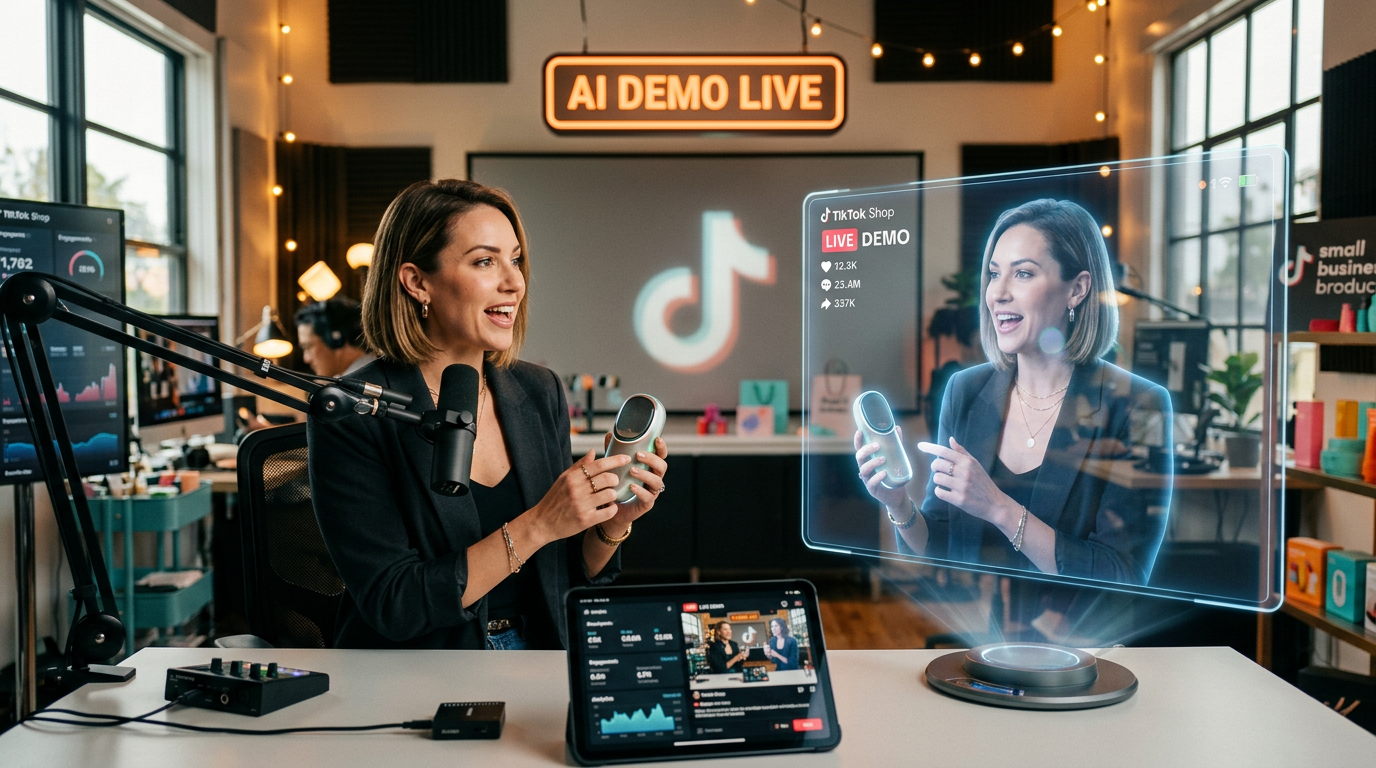
TikTok Shop is on track to hit nearly $23 billion in US sales according to data from AI News Today. While you might think these sales come from teenagers dancing, the reality is shifting. A massive wave of sellers now uses AI digital twins to handle the repetitive work of product demonstrations. A digital twin is a high-quality video clone of a person that speaks any script you write without you ever standing in front of a lens.
Think about the last time you filmed a product demo. You had to worry about lighting, background noise, and stumbling over words. It takes hours to get 60 seconds of usable footage. With a digital twin, you record yourself once for about 10 minutes to create the base model. After that, you just type what you want to say and the AI generates a video of you saying it perfectly. This allows small business owners to fill their shops with content while they focus on shipping orders.
The Advantage of a Version of You That Never Sleeps
Most business owners are exhausted by the content treadmill. They know they need video to build trust, but they don't have time to be a full-time creator and a CEO. This is the conversion advantage. If you have 50 products, you likely only have videos for the top 3. The other 47 sit there with static images because you haven't had time to film. An AI digital twin lets you bolt a personalized video onto every product listing in an afternoon.
Consistency wins over high production value. Your customers don't need a Hollywood movie. They need a human face explaining how the product works and answering basic questions. When you wire up an AI avatar (a digital representation of yourself) to your product descriptions, you're creating a 24/7 sales force. These digital creators are already appearing across TikTok Shop because they work without breaks and never have a bad hair day.
Step 1: Record Your Base Footage
Give the AI something to work with. This involves filming yourself speaking naturally for about 5 to 10 minutes. Use a clear background and make sure your room is quiet. You aren't filming a specific ad. You're just capturing your likeness and the way your mouth moves. Once you upload this to a digital twin platform, the software builds a map of your face and voice.
Step 2: Script Your Product Demos
Don't overthink the writing. Look at the top 3 questions customers ask about your product and answer them. Keep scripts under 60 seconds. Since the AI does the talking, you can even translate these scripts into different languages to reach new markets. You're simply stacking scripts into the software and letting the machine render the video files. It's much faster than setting up a tripod every time you have a new idea.
Step 3: Test and Iterate
If a video isn't converting, you don't have to re-film it. You just tweak the text in your script and hit generate again. You can test 3 different hooks for the same product in about 5 minutes of work. This allows you to sand down your sales pitch until it's sharp. You're moving from being the cameraman to being the director.
Why This Matters for Small Sellers Right Now
The barrier to entry for video marketing just hit the floor. Large brands already use these tools to scale their reach, and small sellers need to keep up. If you can produce more video content than your competitor with less effort, you win. This is about using technology to make the human element scaleable. You're still providing the expertise, you're just using a digital tool to deliver it to more people at once.
Start by picking your slowest-selling product. Write a 30-second script explaining its best feature and use a digital twin to create the video. Post it and see what happens. You'll likely find that having a face associated with the product increases the time people spend on your page. Once you see it work, you'll want to wire this process into your entire inventory.
If you want to see exactly how to set these tools up without getting bogged down, come join our free 3-day training. I'll show you the exact buttons to click so you can get your first digital twin running by the weekend.
FAQ
What is an AI digital twin for sales?
It is a high-quality video clone of your face and voice. You record a few minutes of footage once, and then the AI can generate new videos of you speaking any script you type out.
Is it hard to set up a digital twin?
No. It usually requires about 10 minutes of filming yourself on a smartphone. The software handles the rendering and mapping automatically.
Will customers know it's an AI?
Most modern digital twins are very realistic. While some viewers might notice, the primary goal is to provide helpful information and a human face, which builds more trust than a simple text description.