Audit Your AI Content Using Wikipedia’s Red Flag Criteria
Audit your content for the 'rule of three' adjectives, unnecessary summary sections, and citations that point to real sources but state the wrong facts.
Key Takeaways
- AI detectors are often inaccurate; human editorial frameworks are more reliable.
- Look for structural patterns like repetitive sentence rhythms and sets of three adjectives.
- Verify that citations actually support the specific claims made in the text.
- Remove summary sections to make business writing more direct and professional.
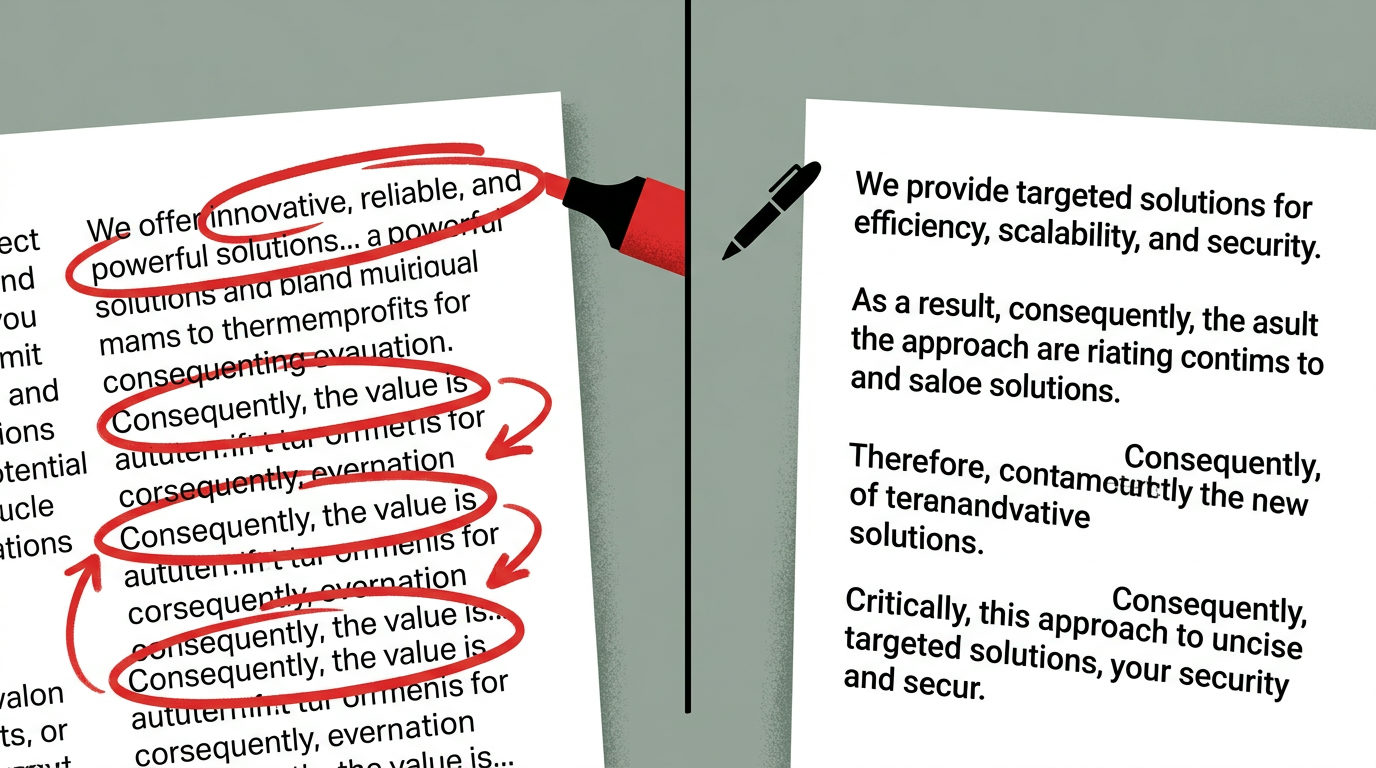
Software that claims to detect AI writing is often wrong. Instead of relying on a percentage score from a tool, you can use the same editorial standards human editors at Wikipedia use to find and strip out machine-generated junk. Volunteers at the WikiProject AI Cleanup have identified specific patterns that signal a lack of human oversight.
According to research from IEEE Spectrum, Wikipedia editors found that early AI was easy to spot because of clichés like "stands as a testament" or "rich cultural heritage." By 2025, the markers became more structural. The bots now rely on the "rule of three" or add unnecessary sections like "Why is this important?"
The Red Flag Audit Checklist
Use these 4 markers to sand down your drafts before you hit publish. If your content hits more than 2 of these, it probably needs a heavy rewrite to keep your authority intact.
- The Conclusion Trap: Does the article end with a summary that starts with "Overall"? Wikipedia editors flag these because good business writing should be informative without repeating itself at the end.
- The Rule of Three: AI loves to group adjectives or benefits in sets of 3. Check your sentences for patterns like "efficient, reliable, and scalable." If every paragraph follows this rhythm, it feels robotic.
- Structural Repetition: AI overuses specific structures of speech that aren't conclusive by themselves but become meaningful as they accumulate. If the rhythm of every sentence feels identical, the bot likely wrote it.
- Filler Phrases: Search your document for "testament to" or "vibrant tapestry." These are fluff words that add no data but take up space.
How to Verify Your Citations
The most dangerous red flag isn't the tone: it's the math. Wikipedia editors found that even with modern tools, AI often finds a real source but gets the facts inside that source completely wrong. This is harder to catch than a total hallucination because the link looks legitimate.
To audit this, pick 3 specific claims in your draft. Open the source link and verify the number or fact manually. If the AI says a report claims a 20% increase, but the source says 15%, you must audit every single link in the document. Never assume a real link equals a real fact.
The Production Speed Test
Wikipedia editors also look at the metadata. If a contributor submits 5 long articles in 5 minutes, it triggers an audit. In your business, look at your output volume. If you are publishing at a rate that a human could not possibly research and write, search engines will likely notice. Wire up a workflow where AI does the first draft, but a human spends at least 30 minutes tightening the logic and checking the sources.
Start by running your last 3 blog posts through the Red Flag checklist. If they feel repetitive, strip back the adjectives and remove the summary sections to make the content more direct.
FAQ
What is a hallucination in AI writing?
A hallucination happens when the AI makes up a fact, date, or citation that doesn't exist. Wikipedia editors found that AI often cites a real source but gets the specific numbers or claims inside that source wrong.