Walmart Just Lowered the Barrier to TV Advertising for Local Shops
Walmart is acquiring Vibe.co to bring streaming TV ads to smaller businesses. This shift allows local shops to target specific zip codes and interests on smart TVs without needing a massive budget or a professional film crew.
Key Takeaways
- Walmart is acquiring Vibe.co to simplify Connected TV (CTV) advertising.
- Small businesses can now target ads by zip code and buyer behavior instead of broad regions.
- TV advertising no longer requires $50,000 minimum spends or high-end production.
- Retargeting allows you to show TV ads to people who just visited your website.
- Early adopters can gain a massive authority boost by appearing on the big screen for a fraction of traditional costs.
The Big Ad Spend Barrier Just Cracked
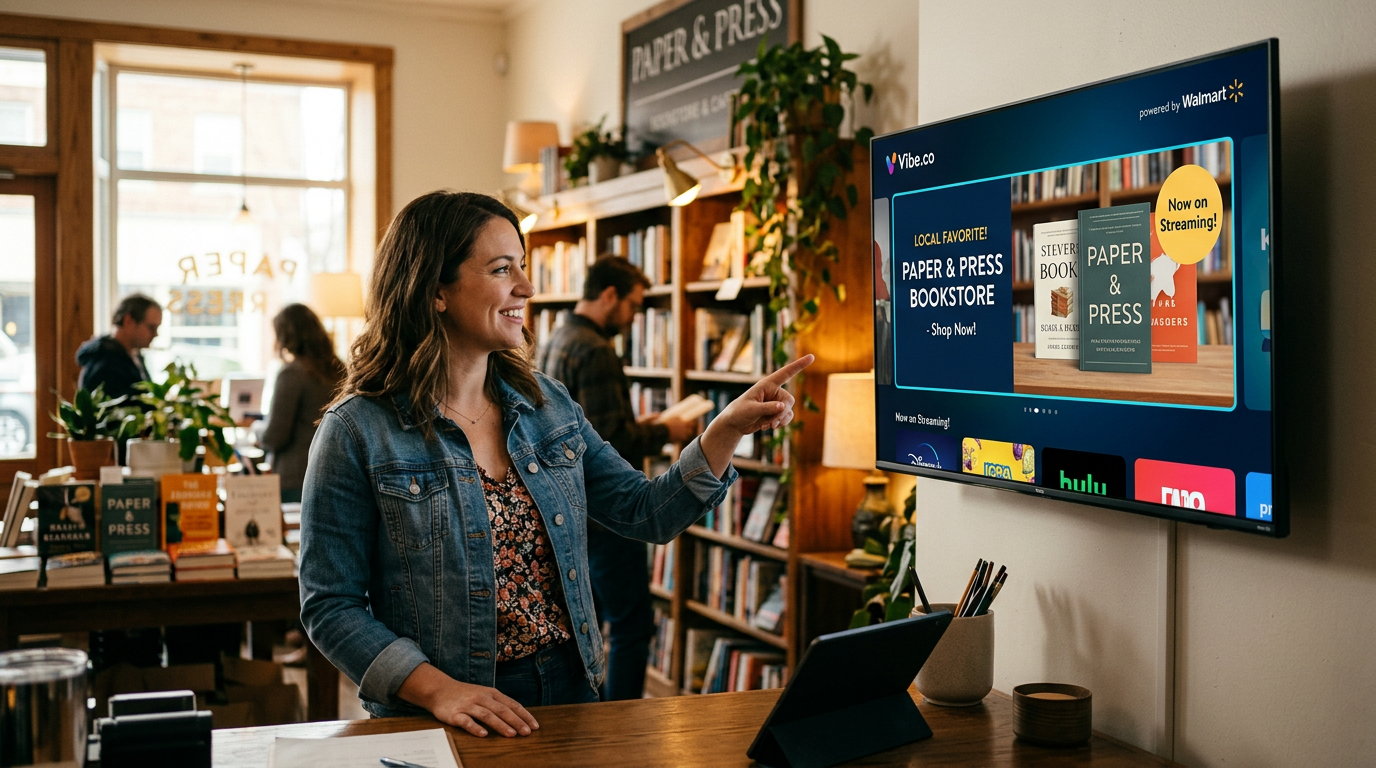
Walmart is buying a company called Vibe.co to make it easier for smaller brands to buy ads on streaming television. You can see the official announcement in their recent business filings. This matters because it moves TV ads away from $50,000 minimums and into the same bucket as a Facebook post or a Google search.
Vibe.co specializes in Connected TV (CTV) advertising. That is a plain way of saying ads that show up on your smart TV while you watch apps like Hulu, Peacock, or Roku. For years, these spots were reserved for national brands with massive agencies. By folding this tech into Walmart Connect, the retail giant is signaling that they want your local business dollars on the big screen.
I think this is the most overlooked shift in local marketing right now. Most small business owners assume TV is out of reach. They think they need a film crew and a six-figure budget. This acquisition proves the infrastructure is being rebuilt so you can buy targeted ads in your specific zip code for a few hundred dollars. It is about opening access to the living room.
Why This Works for Your Local Shop
When you buy a traditional TV ad, you pay to show it to everyone in a city. You waste money showing lawn care ads to apartment dwellers. Connected TV (CTV) changes the math. Because these TVs are connected to the internet, the system knows who is watching. You can choose to only show your ad to people who live within 5 miles of your store and have an interest in home improvement.
Walmart is doing this because they have mountains of data on what people actually buy. By owning the ad platform, they can help a local brand show an ad to a customer who just bought a related product at a nearby store. It closes the loop between seeing an ad on a screen and actually swiping a credit card at a register.
I have seen business owners spend $2,000 a month on junk mail that gets thrown away instantly. That same $2,000 can now put your face and your brand on a 65-inch screen in the homes of your best potential customers. The perceived authority of being on TV is still massive, even if you only spent $5 to reach that specific house.
How to Start Without a Film Crew
You do not need to hire a production company to get started. Most successful CTV ads for small businesses are shot on a modern smartphone. They look like authentic testimonials or quick walkthroughs of a shop. The goal is not to look like a Super Bowl commercial. The goal is to look like a trusted local expert who happens to be on the screen between episodes of a favorite show.
You can stack these ads by showing them only to people who have already visited your website. This is called retargeting. If someone looks at your pricing page on their phone, you can set it up so your ad appears on their TV an hour later. It makes your business look much larger and more professional. It builds a level of trust that a simple text ad cannot match.
Your Action Plan for This Week
First, go look at your current marketing spend. Identify the money you are throwing at broad, unmeasurable tactics like billboards or generic radio spots. You want to strip back those expenses and move them toward platforms that give you data on who saw the ad and what they did next.
Second, start filming short, 15-second videos of your product or service in action. Keep them simple. State the problem, show your solution, and give a clear call to action. Use a tripod and make sure the lighting is bright. These are the building blocks for your first campaign.
Third, keep an eye on the Walmart Connect portal. As they integrate Vibe.co, the tools to target local shoppers will become even more accessible. You want to be ready to bolt this onto your existing sales process as soon as the doors open wide. The early adopters on these platforms usually get the cheapest rates before the big players bid the prices up.
I will be watching how this integration rolls out over the next few months. The winners won't be the ones with the biggest budgets, but the ones who understand how to use this data to speak directly to their neighbors. If you want to see how we wire up these kinds of systems to speed up the process, my 3-day training is the best place to start. We strip away the jargon and focus on the exact steps to get your first automated lead system running.
FAQ
What is Connected TV (CTV)?
Connected TV refers to any television set that connects to the internet to stream video content through apps like Hulu, YouTube, or Roku.
How much does it cost to start TV advertising now?
With platforms like Vibe.co, you can often start with budgets as low as a few hundred dollars, rather than the tens of thousands required by traditional stations.
Do I need a professional video editor?
No, many effective local ads are shot on smartphones. The focus is on clear messaging and local relevance rather than cinematic special effects.