The Hidden Copyright Trap in Your AI Content
AI tool Suno is under fire for allegedly scraping YouTube data. For small business owners, using AI-generated music in ads could lead to copyright claims. Protect your brand by auditing your content and prioritizing tools with clear legal protections.
Key Takeaways
- AI music generators like Suno are being scrutinized for using scraped YouTube data without permission.
- Small businesses are legally responsible for any copyrighted material they publish, even if an AI tool generated it.
- Terms of service from AI companies may not protect you from third-party copyright lawsuits.
- Avoid using prompts that name specific artists to reduce the risk of legal claims.
- Treat AI-generated assets as temporary or internal until clearer legal precedents are set.
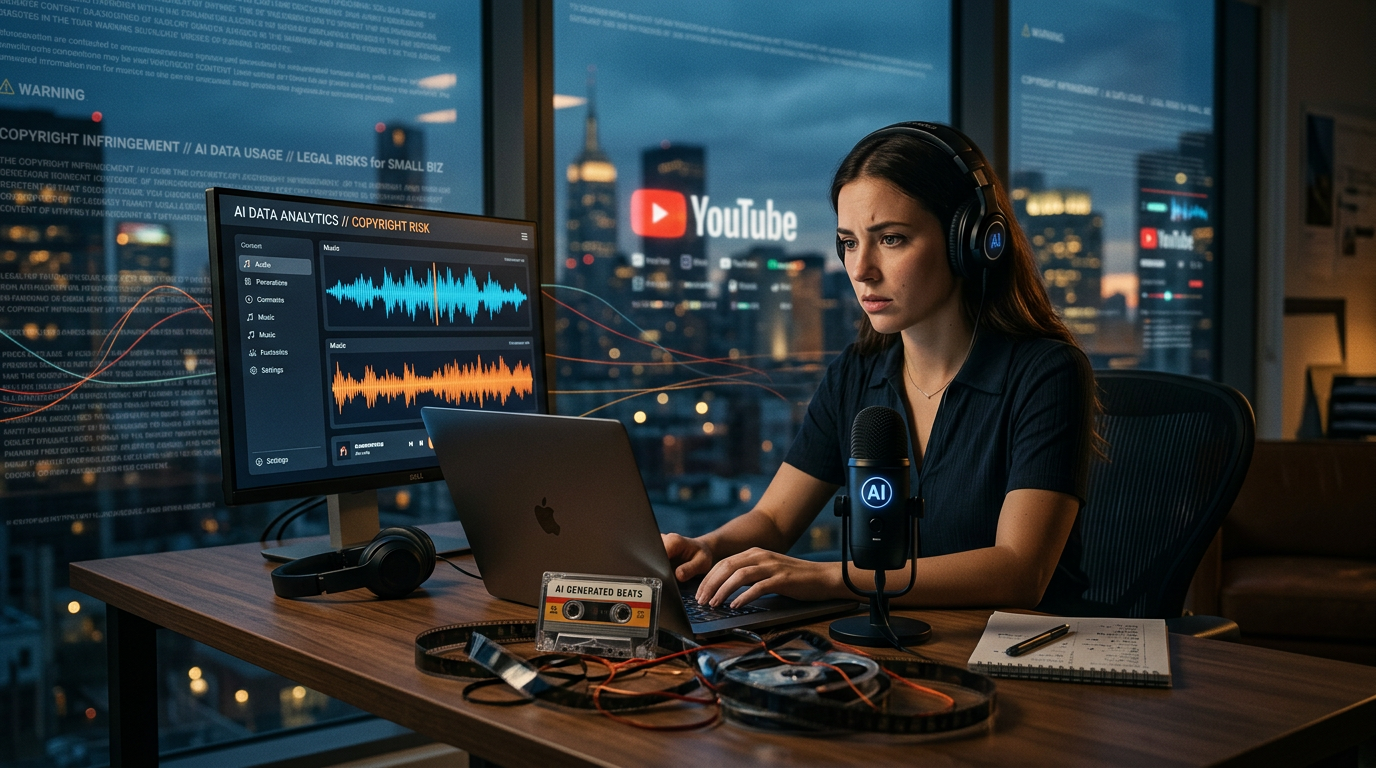
The Price of 'Free' Content
You're likely using tools like Suno to whip up jingles for Facebook ads or background music for Instagram reels. It feels like magic to type a prompt and get a professional track in 30 seconds. But the ground beneath these tools is shakier than most business owners realize. Researchers found evidence that Suno likely used data scraped directly from YouTube to train its systems, according to reporting from TechCrunch. This situation represents a significant liability for you if you're using that content to represent your brand.
When an AI company scrapes the web, they use automated software to harvest millions of songs or videos from creators without asking. If those creators win a lawsuit against the AI company, the legal fallout can reach the businesses using the output. You don't want to find out your marketing video contains music that a court decides is stolen property. The risk of AI content copyright risks for small business grows every time these training methods come to light. If you're building a brand, you need to know where your assets come from before you bolt them onto your website.
How the Scraping Happens
Most AI models learn by feeding on giant piles of data to find patterns. In this case, hackers found links to YouTube videos buried within the AI's internal logic. This suggests the tool didn't just learn how music works: it specifically studied copyrighted material hosted on Google's video platform. When you ask the AI to write a song, it pulls from those patterns. If the pattern is too close to an original artist's work, that artist might have a claim against anyone using the resulting audio.
Business owners use these tools because they're cheap. It costs a few dollars a month instead of $500 for a custom track. But saving a few hundred bucks today could lead to a $10,000 legal headache later. If a major record label goes after businesses using scraped content, they won't care that you didn't know how the software worked. They'll just see their property being used to sell your products without a license.
The Liability of the End User
Many people think the AI company takes all the heat. That's a dangerous assumption. In the eyes of the law, if you publish a video with unlicensed music, you're the one infringing. Even if the AI tool's terms of service claim you own the output, those terms can't overrule federal copyright law. If the AI company didn't have the right to the data, they can't legally pass ownership to you. It's like buying a car from someone who stole it. Even if you paid for it, you don't actually own the title.
The safest path is to treat AI content as a starting point, not a finished product. Use it for ideas or internal drafts, but be extremely careful with anything that touches the public. Large corporations are already stripping back their use of these tools until the courts settle these scraping cases. As a small business owner, you don't have a team of 50 lawyers, so you have to be even more cautious than the big guys.
Practical Steps to Protect Your Brand
You don't have to stop using AI, but you do need to wire up some safeguards. Here's how to handle AI content this week:
- Audit your current ads. Look at any music or images you generated with AI. If the tool is in the news for scraping issues, consider swapping those files for royalty-free tracks from a reputable source like Epidemic Sound.
- Check the terms of service. Read the fine print of your AI subscriptions. Look for "indemnification" clauses. This means the company promises to pay your legal fees if you get sued. If they don't offer this, you're on your own.
- Keep a paper trail. Save the prompts you used and the date you generated the content. If you ever have to prove you acted in good faith, having a record is better than having nothing.
- Don't use famous names. Never prompt an AI to create music "in the style of" a specific artist. This increases your risk of a right-of-publicity claim, which is separate from copyright and just as expensive.
- Stack your protections. If you use an AI song, run it through a search tool. If it sounds remarkably like an existing piece of work, trash it and start over.
What to Watch Next
The courts are currently deciding the fate of these scraping practices. We'll likely see a major ruling within the next 12 months that defines whether training counts as "fair use" (a legal exception for using copyrighted material). Until then, treat every AI-generated file as a temporary asset. If you want to learn how to use these tools without putting your business at risk, my 3-day training covers the right way to build your AI workflow from the ground up. We'll look at the exact steps to keep your brand safe while still taking advantage of the speed AI offers.
FAQ
What is scraping in AI training?
Scraping is when a company uses automated software to download massive amounts of data, like songs or videos, from the internet to teach an AI model how to create new content.
Can I be sued if the AI company stole the data?
Yes. If you use the output in your marketing, you are the publisher. The original owner of the material can pursue anyone using their work without a proper license.
How can I tell if an AI tool is safe to use?
Look for companies that disclose their training data or offer 'indemnification,' which means they promise to cover your legal costs if their content causes a copyright issue.