Stop Overpaying for Cloud Power: How New Hardware Slashes Your AI Costs
New testing shows MI355X chips run the Kimi K3 AI model with better performance per dollar than the upcoming B300. Small businesses can reduce AI operational costs by choosing efficient hardware setups instead of chasing famous brands.
Key Takeaways
- Performance per dollar is more important than raw power for small business scaling.
- The MI355X hardware offers better cost efficiency for running Kimi K3 than the B300.
- Small businesses can compete by using high-efficiency hardware to lower overhead.
- Auditing your current AI tool tiers can lead to immediate cost savings.
- Alternative cloud providers often offer better rates by using high-efficiency chips.
The Price of Performance is Dropping
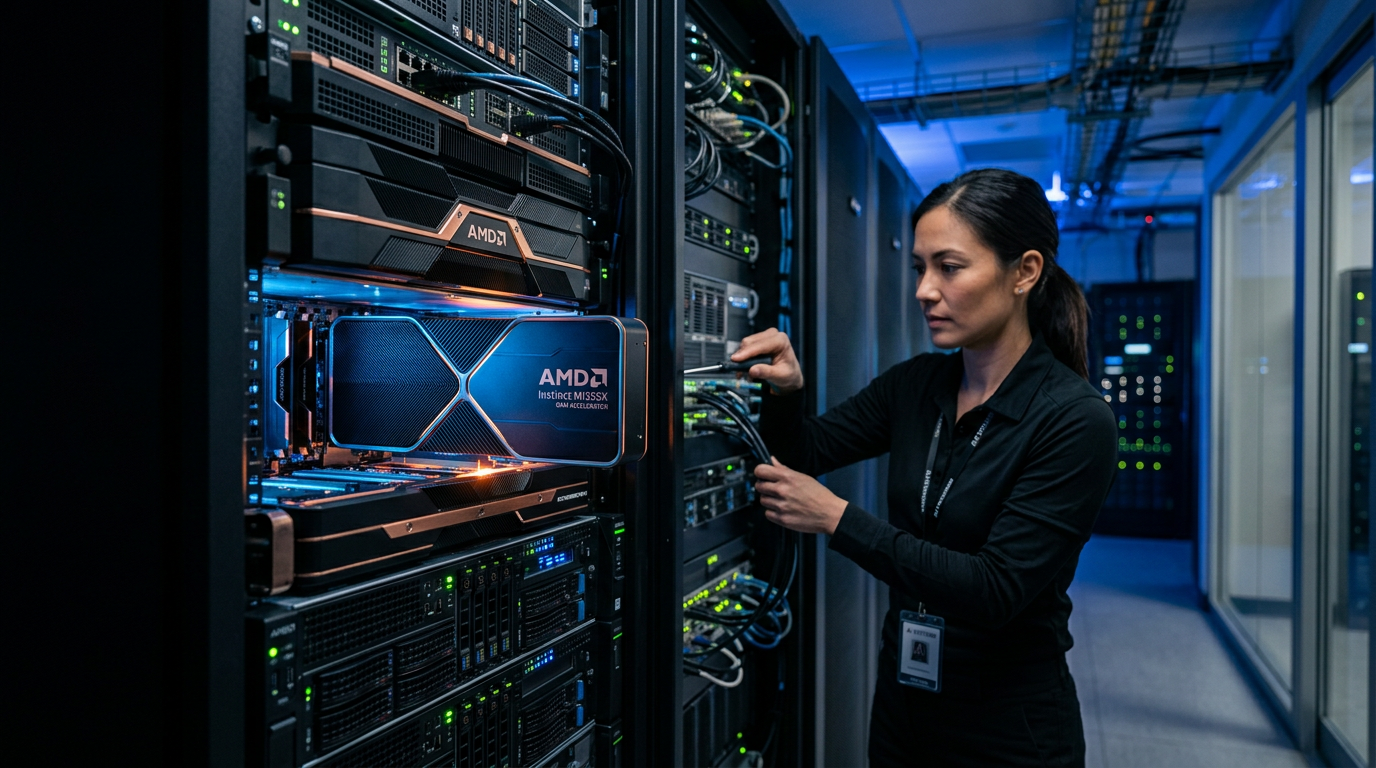
Most business owners think they have to pay a premium to run high-end AI. They see big names in the chip industry and assume the most expensive hardware is the only way to get results. That's no longer true. Recent testing shows you can run massive AI models, like Kimi K3, on hardware that offers better performance for every dollar you spend compared to standard industry leaders. You can read the technical breakdown at Wafer.ai. It shows how MI355X chips outpace B300 benchmarks in cost efficiency.
This matters because your budget is finite. If you can get the same speed and accuracy for 20% or 30% less, you can put that money back into marketing or hiring. We're moving away from throwing money at the problem. We're entering the era of the efficient build.
Performance Per Dollar is the Only Metric That Matters
When you look at a spec sheet for a computer chip, it usually lists things like teraflops or memory bandwidth. For a business owner, those numbers are noise. You should focus on how many customer queries or data tasks you can complete for a fixed cost. The MI355X is proving it can handle the Kimi K3 model (a very large, capable AI) at a lower cost to value ratio than the upcoming B300 chips from the market leader.
Think of it like choosing a fleet of delivery vans. One brand might have a slightly higher top speed, but if the other brand costs half as much to fuel and maintain while carrying the same load, the choice is obvious. You don't need the fastest chip on the planet. You need the one that delivers the most work for the least investment. This shift allows smaller companies to compete with giants by stripping back overhead.
How to Reduce AI Operational Costs Today
You don't need to be a hardware engineer to start saving money. Most of these savings happen at the software and provider level. If you're currently using a generic cloud provider, you're likely paying a convenience tax. You're paying for their brand name and marketing budget rather than just the raw power you use.
I suggest you look at your monthly AI bill. If you're using a managed service (a company that handles the tech for you), ask them what hardware they use in the background. If they're locked into the most expensive chips, you're subsidizing that choice. Moving your workloads to providers that use high-efficiency hardware like the MI355X can cut your monthly burn significantly.
Practitioner Note
I see businesses wire up their AI systems using the most expensive options because they're afraid of missing out on power. They end up with a Ferrari to drive to the grocery store. Usually, a well-tuned system running on efficient, mid-tier hardware will do the job just as well for a fraction of the price. Focus on the output, not the brand of the chip.
3 Practical Actions to Take This Week
1. Audit your current AI usage. List every tool you pay for and check if they offer different tiers of models. Often, smaller, cheaper models perform 90% as well for 10% of the cost. Bolt on the cheaper version for simple tasks like summarizing emails and save the expensive power for complex data analysis.
2. Research alternative cloud providers. Look for companies that mention using MI355X or similar high-efficiency hardware. These providers are often smaller and hungrier for your business, meaning they'll offer better rates than the household names.
3. Stack your workloads. Don't run your AI processes one by one. If you can group your data processing into batches, you can often take advantage of lower cost spot instances on cloud servers. This is like buying groceries in bulk to get a better unit price.
What to Watch Next
Keep an eye on the release of the B300 chips later this year. While they'll be powerful, the real story is how much more they cost to run compared to the MI355X. If the gap in performance per dollar continues to widen, we'll see a migration of small businesses toward these more efficient setups. I expect the cost of running high-level AI to drop by another 30% to 40% in the next 12 months as this hardware becomes more common.
If you want to see exactly how we set these systems up so you don't waste a dime, join my free 3-day training. I'll walk you through the exact steps to get your business running on AI without the massive price tag.
FAQ
What is performance per dollar?
It's a metric that measures how much work an AI system does (like answering questions or processing data) compared to how much it costs to run that system.
Do I need to buy my own hardware?
No, most small businesses will access this hardware through cloud providers. You just need to choose a provider that uses efficient chips like the MI355X.
Will cheaper hardware make my AI slower?
Not necessarily. High-efficiency hardware is designed to provide the same or better speed for specific tasks while using less energy or costing less to manufacture.