How AI designs circuit boards for small scale physical products
AI tools are now handling complex PCB routing and layout tasks. This means small business owners can design and prototype physical electronics for a fraction of the traditional cost, keeping intellectual property in-house and speeding up the manufacturing process.
Key Takeaways
- AI can now automate the routing of copper traces on circuit boards.
- Small businesses can save thousands in engineering fees by using AI design tools.
- AI allows for rapid iteration if components go out of stock or designs need changes.
- Prototyping costs have dropped significantly, with some boards costing under $50 to print.
- You no longer need an electrical engineering degree to create functional hardware blueprints.
Stop outsourcing your hardware prototypes
If you've ever tried to bring a physical product to market, you know the circuit board is usually where the budget dies. You have a great idea for a smart gadget, but then you hit the wall of PCB design. PCB stands for Printed Circuit Board, which is the green plastic slab inside electronics that connects all the chips and wires. Traditionally, you'd have to pay an engineering firm $5,000 to $20,000 just to get a working layout. That's a massive barrier for a small business owner who just wants to test a prototype.
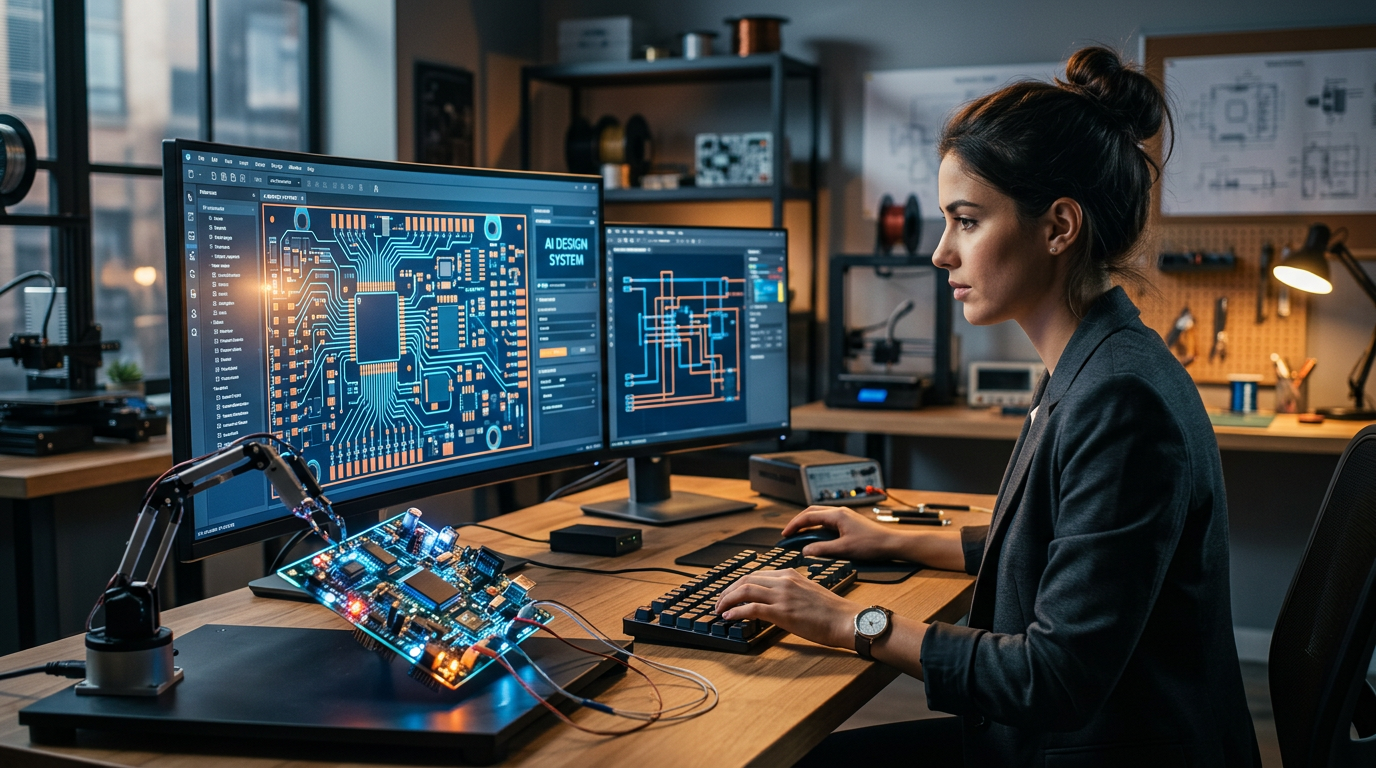
Recent developments show that AI is finally stepping into this technical gap. We're seeing tools that can take a list of components and automatically figure out how to wire them together. According to research on whether AI can design circuit boards, these systems are starting to handle the heavy lifting of routing. Routing is the process of drawing the tiny copper paths that let electricity flow between parts. This isn't just for big tech companies anymore. It's a tool you can use to build your own hardware without a degree in electrical engineering.
The end of the engineering bottleneck
For a long time, hardware was the difficult part of business because you couldn't just code your way out of it. You needed a specialist to spend 40 hours manually clicking traces on a screen. If they made one mistake, you'd wait three weeks for a factory to ship a board that didn't work. AI changes this by running thousands of simulations in seconds. It checks for errors while it works, making sure electricity doesn't jump where it shouldn't. It's like having a senior engineer sitting on your shoulder and correcting your homework in real time.
This shifts the power back to the inventor. You don't need a massive R&D budget to compete. If you can describe what you want the device to do, AI can help translate that into a physical blueprint. This allows boutique hardware shops to move at the speed of software companies. You can iterate, fail, and fix things in days rather than months.
Why this matters now
The real win here isn't just saving money on fees. It's about ownership. When you outsource your design, that firm owns the knowledge of how your product works. When you use AI tools to design in-house, you keep the intellectual property and the ability to make quick changes. If a specific chip goes out of stock, you can tell the AI to swap it for a different one and re-route the board instantly. That kind of agility used to cost a fortune.
Practical steps to start building hardware
You don't need to be a genius to start using AI hardware design for small business. You just need to follow a specific sequence. Start by defining your BOM or Bill of Materials. This is just a list of every part your device needs, from the battery to the light bulbs. Once you have that list, you can feed it into modern design software that has AI routing features built in.
Next, use the AI to generate a preliminary layout. Don't expect it to be 100% perfect on the first try, but it will get you 80% of the way there. You can then use the software's built-in checkers to find any remaining errors. Most of these tools are now cloud-based, meaning you don't need a powerful computer to run them. You just need a web browser and a clear idea of your product's function.
Finally, send your AI-generated file to a low-cost fabrication house. There are services now that will print a handful of boards for less than $50. This allows you to hold a physical version of your idea in your hand for less than the cost of a nice dinner. It's a total shift in how we think about physical invention.
What to watch next
Keep an eye on generative electronics. We're moving toward a point where you can simply type "I need a board that monitors soil moisture and sends a text message" and the AI will produce the entire schematic. The barrier between an idea and a physical product is getting thinner every month. If you've been sitting on a hardware idea because you were afraid of the technical complexity, it's time to take that idea off the shelf. The tools are ready when you are.
FAQ
What is a PCB and why is it hard to design?
A PCB (Printed Circuit Board) is the board inside electronics that connects components. It's hard to design because hundreds of tiny wires must be routed without touching each other or causing electrical interference.
Does AI replace the need for an engineer entirely?
Not yet. AI handles the repetitive and complex routing tasks, but a human still needs to define what the board should do and perform a final check on the design.
Is AI hardware design expensive for a small business?
Actually, it's cheaper than the alternative. Many AI-assisted design tools are available via subscription or even free for small projects, compared to the thousands charged by design firms.