Don't Pick a Winner: How to Build a Model-Agnostic Business in the GPT-6 Era
Do not choose a single model for 2026. Build a model-agnostic stack using middleware and standardized prompts so you can swap between GPT-6, Opus 5.5, or Meta Muse as pricing and performance change.
Key Takeaways
- Frontier models are now updating in cycles as short as 90 minutes.
- Meta Muse is shifting the focus toward wearable AI and personal agents.
- Model-agnostic stacks prevent vendor lock-in and price spikes.
- Separate your business data and instructions from the specific AI provider.
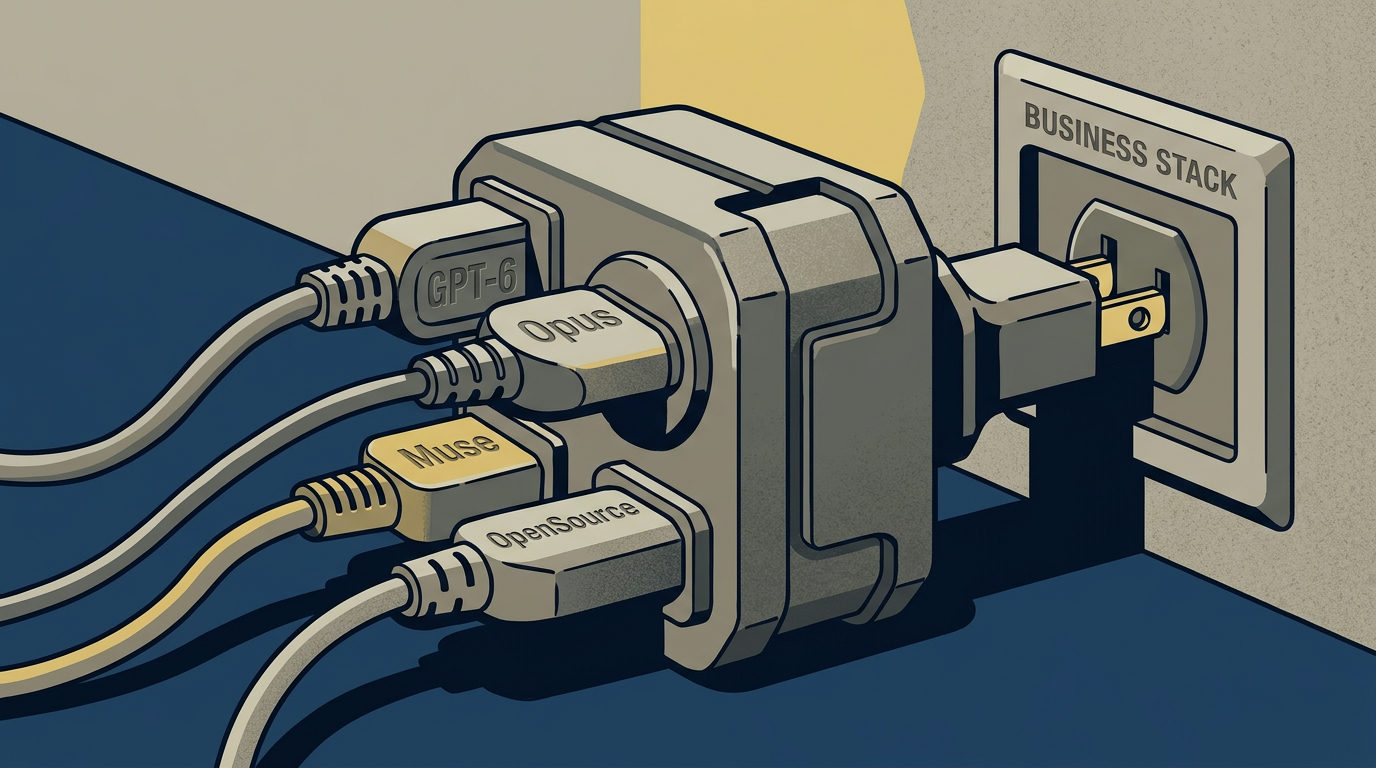
OpenAI just updated GPT-6, and Anthropic followed 90 minutes later with Claude Opus 5.5. While these giants fight for the title of the smartest model, Meta is moving into hardware with Muse, an AI agent living in smart glasses and wearable devices. If you're trying to decide which one to bet your business on for 2026, you're asking the wrong question.
Choosing a single model is like choosing one employee and hoping they never quit. In this market, models become obsolete in months. The goal isn't to find the best AI, but to build a system where you can swap the brain without breaking the body of your business.
The Risk of Being Locked In
When you build your workflows directly into one specific AI tool, you're at the mercy of their pricing and performance. If Opus 5.5 offers better math today, but GPT-6 wins on coding tomorrow, you want to be able to shift your tasks instantly. Companies like Ema are already doing this by selling teams of AI agents that automate HR and finance, pulling from multiple providers like Google and Microsoft to get the job done.
How to Build a Model-Agnostic Stack
To stay flexible, you need to separate your business data from the AI that processes it. Think of the AI as a lightbulb and your business as the lamp. As long as the socket is standard, you can plug in any brand of bulb.
- Use a Middleware Layer: Instead of connecting your software directly to OpenAI, use a connector tool like Make or Zapier. This lets you change the destination model with a few clicks.
- Standardize Your Prompts: Keep your instructions (the text you send to the AI) in a separate document or database. If a new model like Meta Muse becomes the leader in mobile tasks, you can paste your existing instructions into its interface without starting from scratch.
- Focus on Task Mapping: Identify which tasks need high-end logic (Opus 5.5 or GPT-6) and which need simple speed. You don't need a top-tier model to summarize a basic email.
What to Watch for in 2026
The biggest shift isn't just intelligence; it's where the AI lives. Meta is pushing Muse into wearable, Tamagotchi-style devices and glasses to make AI part of daily life. For your operations, this means your team might soon interact with your business data through voice or vision rather than just typing into a chat box.
Don't get distracted by the model names. Focus on wiring your business so that no matter who wins, your systems keep running. Audit your current AI uses today and identify where you're currently tied to just one provider.
If you want to see exactly how to set up these flexible workflows, join our next free 3-day training.